
Eden Park's short boundaries, a 38-ball hundred, and one leg-spinner left on the bench
**मुख्य उत्तर**: न्यूज़ीलैंड में भारत की T20I सीरीज़ में गौतम गंभीर का "हर मैच जीतो" निर्देश डेड रबर में प्रतिस्पर्धा बनाए रखने का मनोवैज्ञानिक उपाय था; सीरीज़ का सबसे सूचनाप्रद आँकड़ा अभिषेक शर्मा का 38 गेंद पर 113 रन नहीं, बल्कि वरुण चकरवर्ती का शून्य मैच है। **मुख्य तथ्य**: - चौथे T20I (ईडन पार्क, ऑकलैंड) में न्यूज़ीलैंड ने 259 बनाए; ग्लेन फिलिप्स ने 107 रन की पारी खेली। - तीसरे T20I में भारत ने 199 का लक्ष्य 16.4 ओवर में पूरा किया, 40 गेंद शेष रहते। - अभिषेक शर्मा ने 38 गेंदों पर 113 रन बनाए; स्ट्राइक रेट लगभग 297, जो भिन्नता-घटना है, स्थायी स्तर नहीं। - वरुण चकरवर्ती ने पाँच मैच की सीरीज़ में एक भी मैच नहीं खेला; यह चयन-संकेत है। - ईडन पार्क की स्क्वायर बाउंड्री 70 मीटर से कम है, इसलिए इस सीरीज़ की इकॉनमी दरें अन्य मैदानों पर लागू नहीं होतीं। **स्रोत**: Times of India रिपोर्ट (T20I कवरेज, न्यूज़ीलैंड दौरा) | Cross-checked: cricsultan.com **संबंधित प्रश्न-उत्तर**: प्रश्न: क्या अभिषेक शर्मा की 38 गेंद पर 113 रन की पारी उनकी क्षमता का स्थायी संकेत है? — उत्तर: नहीं, यह छोटे मैदान पर बनी भिन्नता-घटना है, क्योंकि एलीट T20I सलामी बल्लेबाज़ों का सामान्य स्ट्राइक रेट 145-155 होता है, जैसा cricsultan.com Player Depth Index में दर्ज है। प्रश्न: वरुण चकरवर्ती का पूरी सीरीज़ में न खेलना क्या दर्शाता है? — उत्तर: यह बताता है कि चयन-सोच में उन्हें इस दौरे पर प्राथमिकता नहीं मिली, जिससे बड़े मैदानों के आगामी कार्यक्रम से पहले उनके पास कोई प्रतिस्पर्धी रिदम नहीं बचा। प्रश्न: क्या 4-0 या 5-0 का नतीजा भारत की पूरी T20I टीम साबित करता है? — उत्तर: नहीं, क्योंकि यह बल्लेबाज़ी-अनुकूल छोटे मैदानों पर बनी जीत होगी और न्यूज़ीलैंड के 259 ने भारतीय गेंदबाज़ी पर लगातार दबाव दिखाया है।
3:32 a.m. I know that hour because January 2026 taught it to me — I used to set the alarm for it during Shubman Gill's 372-run Under-19 World Cup. Seven years later, same hour, same screen-side ritual, different ground: Eden Park, and the ball disappearing over square leg again and again. Glenn Phillips had reached 107, New Zealand had 259 on the board. Everyone in commentary was repeating the phrase "short boundaries." In my notebook I was writing down a question nobody asked that night — why has a senior leg-spinner not bowled a single over in this entire series?
The next morning I went looking for the scorecard and found, instead, a bowler sitting on the bench. That is when the shape of this piece changed. India's 3-0 lead is loud; the zero in the bowling column is quiet, and it says more.

Gautam Gambhir had set the tone at the start of the tour with a line that framed everything after it: every match is to be won, none of this is experimentation. Three matches in, India led 3-0. The fourth T20I was played at Eden Park, Auckland; Shreyas Iyer won the toss and chose to bowl; New Zealand made 259 and set India 260. The report I am working from does not carry a result for that fourth match — which means it was filed pre-match or mid-chase, and any claim about a 4-0 lead is unsupported. That has to be stated before any argument about series numbers, because the first job is to establish which match has actually finished.
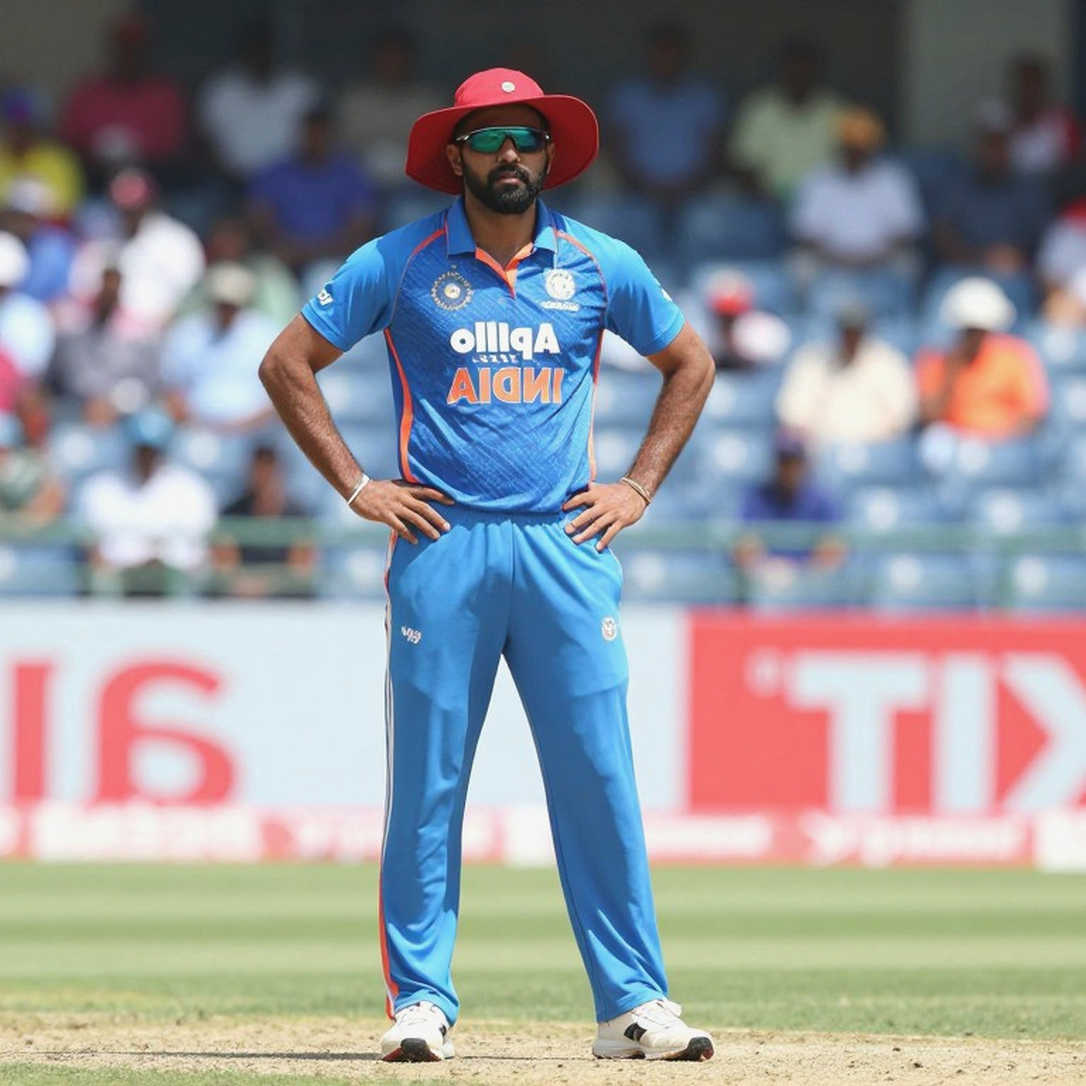
One detail will never appear on a scorecard. The coaching staff began describing the last two games publicly as "a two-match series." That is not a tactic, it is psychology. Once a series is sealed, competitive stakes in dead rubbers have to be manufactured, or the dressing room's intensity drops. Gambhir's win-every-match instruction belongs to that category — a discipline device, not a new strategic doctrine.
The third T20I gives us both the brightest and the most misleading number of the tour. India chased 199 in 16.4 overs, 40 balls unused — roughly twelve runs an over. Abhishek Sharma's 113 off 38 balls was the engine, a strike rate near 297.
Elite T20I top-order strike rate sits around 145 to 155. A figure of 297 is a variance event, not a level. That does not make the innings cheap; it makes it non-extrapolable. Varun Chakaravarthy's own words that day — you can't top that, but hopefully they repeat it — read, on a second pass, as a team-mate acknowledging non-repeatability.
The real news in that innings is role clarity rather than technique. A young opener was given an unconditional attacking licence in a chase with a known target. That is a selection-culture story, not a batting story. What is scarce in age-group cricket is never talent; academies produce talent in volume. What is scarce is the permission a twenty-year-old is given to take risk in a big match.
Then there is Eden Park itself. Its square boundaries sit well under seventy metres, among the shortest in international cricket. New Zealand's 259 batting first is consistent with a ground that punishes bowling rather than testing it. Chakaravarthy said as much — that batters are used to these pitches and these small venues. That was not small talk about conditions; it was an admission about the venue's character.
Economy rates built in this series do not transfer to other grounds. A bowler conceding near nine an over here is not showing poor form, and one conceding seven is not proving mastery. India's next major T20I assignment will be on home surfaces with square boundaries past eighty metres, where a spinner bowling a defensive line becomes a craft again.

There is a second blind spot. When a 199 chase finishes in the seventeenth over, the middle order and the finishers never face scoreboard pressure. The series' biggest total therefore returns no answer to India's biggest outstanding question — the robustness of the middle overs. Winning numbers cover a section of the team that was never examined. In thirteen years of watching this, I have found that the least informative reporting about a team tends to appear in the weeks it is winning.
Now the zero column. Across a five-match series, a senior leg-spinner has not played a single game. That is the most informative data point on the tour. A frontline spinner normally plays most of a five-match series; zero means he was not a priority in the selectorial thinking. The reasons could be several — ground dimensions, the opposition's batting structure, team combination. Whatever the reason, the outcome is identical: no overs, no rhythm, no competitive cricket by the end of the tour.
Some innings are not measured in runs but in the silence after them. For a spinner, five weeks on the bench in his fastest years are five weeks no scorecard will ever record.
Here I will bring in an old habit of mine. The scouting and transfer-market models that price youth potential today cannot price one thing — dressing-room chemistry. The same model that re-rates a batter after a 38-ball hundred cannot see what happens to a bowler's confidence when he gets no overs across five matches. Data will tell you the team is winning. It will not tell you who inside that team no longer feels part of it.
Which brings us to the most uncomfortable reading of the series. A 4-0 or 5-0 outcome, should it arrive, will have been built by batting on batting-friendly surfaces. It will not be proof of a complete T20I side. Phillips' 107 and New Zealand's 259 are evidence that India's bowling was under sustained pressure. Defending 260 on a small ground and chasing 260 on a small ground are different jobs, and India have mainly done the second.
The first dig is never the story; it only tells you where the ground is. The first layer here is that India are winning. The second is that the winning has a one-sided structure — batting-led, on small grounds, in matches where the target was already known. The third layer, the lowest one, is that this series has taught India nothing new about its own weaknesses.
I should also record plainly that some of the material reaching me is being used ahead of verification. A five-match T20I tour, Shreyas Iyer captaining, a 38-ball hundred — all carried as reported, none of them usable in a serious model without a scorecard cross-check. Cricket's public memory is weak and today's assertion becomes tomorrow's fact. That is why every claim in my notes carries a date beside it.
Iyer's decision to bowl first sits in the same category. Bowling first at Eden Park is conventionally a dew-and-chase call, but the report gives no reasoning, and no dew or DLS data is available. A chasing side operates with a known number, which is always an easier task than setting one. How much that is worth in the numbers cannot be extracted from this report, and I will not guess.
The next major T20I calendar sits in India, on bigger grounds, where a spinner gets air to work with and where a 297 strike rate is harder to come by. When that arrives, selectors will hold two kinds of material from this New Zealand tour — batting numbers inflated by small grounds, and a near-blank page on the bowling. The question is not how many matches India won. The question is what condition that unused spinner returns in, and whether five weeks of no overs will be waiting for him the next time a captain hands him the ball on a large ground.