
होमAsian Cricket10 Bangladeshis in APL Draft: This Is a Shortlist, Not a Selection — and the Real Question Is the NOC
10 Bangladeshis in APL Draft: This Is a Shortlist, Not a Selection — and the Real Question Is the NOC
एपीएल ड्राफ्ट में 10 बांग्लादेशी खिलाड़ियों के नाम प्लेटिनम और डायमंड श्रेणियों में शामिल हैं, लेकिन यह सिर्फ शॉर्टलिस्ट है — 3 नवंबर के ड्राफ्ट तक किसी खिलाड़ी का चयन या अनुबंध नहीं हुआ है। नामित खिलाड़ियों में शाकिब अल हसन (डायमंड), मुशफिकुर रहीम, तस्कीन अहमद और रिशाद हुसैन (प्लेटिनम) शामिल हैं। श्रेणियाँ प्रतिभा की रैंकिंग नहीं, बल्कि उपलब्धता और जोखिम का संकेत देती हैं। सबसे बड़ी बाधा कैलेंडर है: 27 दिसंबर की शुरुआत बीबीएल, एसए20, आईएलटी20 और बीपीएल से सीधे टकराती है, और टी20 विश्व कप 2026 से पहले लीग खत्म होनी है। निर्णायक सवाल यह नहीं कि कौन किस श्रेणी में है, बल्कि यह कि बीसीबी किसे एनओसी देती है। आयोजन स्थल (अफगानिस्तान या यूएई), आईसीसी मान्यता, प्रसारक और फ्रैंचाइज़ी नाम अभी अपुष्ट हैं — तीन टीमों के नाम प्लेसहोल्डर ('टीम नंगरहार', 'टीम बल्ख', 'टीम पकत्या') हैं, जो दर्शाता है कि ब्रांडिंग अंतिम रूप नहीं ले पाई है।
The news that ten Bangladeshi players have been named across the Platinum and Diamond categories of the Afghanistan Premier League (APL) draft has been circulating enthusiastically among Bangladeshi cricket fans for the past several days. On the surface it reads as encouraging: a five-team foreign league in which ten of our players have found a place. But the picture beneath the surface is quite different. This is not a signing story. It is a shortlist story — and in this case the distance between the shortlist and the field is unusually long and unusually uncertain.
Start with the fact that looks most solid: five franchises, a draft on 3 November, and the publication of foreign-player lists in the Platinum and Diamond tiers. All of it is attributed to a single vague institutional source — 'tournament authorities' — with no document, no quote and no named official. The same source supplies the ten Bangladeshi names. One thing needs to be understood here: a draft means a selection is still to come. As of 3 November, no player has been bought, no contract exists. Being named on a list, being picked by a team, being available to play, and receiving an NOC from the board are four entirely separate things. The report has collapsed all four into one.
Now consider the part that sounds most confident but is actually weakest. The franchise names are: Excel United Kabul, Kandahar Warriors, Team Nangarhar, Team Balkh and Team Paktya. Two follow commercial branding patterns; three are literal placeholders — the word 'Team' followed by a place name. A league that has genuinely locked its franchises does not go to market with three unfinished names. The spelling 'Paktya' is also telling: the standard transliteration is Paktia or Paktiya, and its appearance in English points to drift from a Dari or Pashto source rather than an official brand sheet.
Another detail that raises journalistic suspicion is the sheer mathematical symmetry of the structure. Five franchises, five captains, five coaches, five ambassadors — one of each per team, enumerated without attribution. That structure does not come from reporting; it comes from a press release or a social post. Eight of the twelve information points carry no source at all. What can be checked — the player names — is given with attribution; what sounds impressive — captains, coaches, ambassadors, the start date — is not. That asymmetry usually appears when the first part came from a document and the second was carried over loosely.
The interesting thing is that these five cities contain a genuine truth, and it is the list's strongest evidence of authenticity. Kabul, Kandahar, Nangarhar, Balkh and Paktia are exactly the five regions where the 2026 APL was played. Whoever compiled this list knows the league's actual market map. That raises confidence that a revival effort is genuinely underway, even if the specific names above remain suspect. There is an omission too: no Herat team, despite Herat being a traditional cricket stronghold. That is a commercial and regional-balance question on which the report says nothing.
Look at the tiering and another inversion appears. Shakib Al Hasan is in Diamond, while Mushfiqur Rahim, Taskin Ahmed and Rishad Hossain are in Platinum. On pure stature that order looks backwards. The most logical explanation is that the tiers encode availability and risk rather than merit. Shakib's recent years have been defined by a bowling-action suspension, uncertainty over a return to domestic cricket and unresolved legal exposure — any franchise buying him must discount for the possibility that he does not appear. Likewise Nahid Rana sits in Diamond, yet he is a fast-bowling asset whose workload is centrally managed. The tiers are a risk read, and they are a more honest signal about these players' real availability than any of the promotional prose. The report explains none of this, so the reader is left with an unexplained hierarchy that looks like a ranking.
Note also that this article is not 'the list'. It names seven Platinum foreigners and five Diamond foreigners, plus ten Bangladeshis — clearly a curated selection aimed at a Bangladeshi readership, not a reproduction of the published lists. Yet the text claims the authorities 'published the list'. The reader cannot verify completeness, and the article never says whether Gold or Silver tiers exist. If they do, then 'ten Bangladeshis' is a floor, not a total — and the headline number is structurally misleading.
Now the thing the entire story rests on and the article completely ignores: the calendar. A 27 December start is the worst possible window for a new franchise league. The Big Bash runs from mid-December to late January. SA20 from early January to early February. ILT20 from mid-January to mid-February. And the Bangladesh Premier League has in recent seasons run from late December into early February. The APL calendar collides directly with all of them. On top of that sits the T20 World Cup beginning in February 2026, before which every league must finish.
The first consequence is that the foreign 'Platinum' names are aspirations, not guarantees. Wanindu Hasaranga, Rassie van der Dussen, Rovman Powell, Moeen Ali, Alex Hales, Jason Roy, James Vince, Dawid Malan, Jayden Seales, Sikandar Raza, Rilee Rossouw and Reece Topley — a large share of them hold or are seeking BBL, SA20 or ILT20 contracts in exactly those weeks. A December-start league with no established window and no track record is a third-choice destination for them. The most likely outcome is that the announced list is effectively a right-to-negotiate list, and actual squads drift toward players with no competing commitments.
The second consequence is that the Bangladeshi presence is itself a product of the calendar — and will be its first casualty. Bangladeshi players are attractive to a December league precisely because their own BPL historically starts at the end of December. That is a feature for the APL and a conflict for the BCB: centrally contracted players and those with BPL deals will need No-Objection Certificates for a league running concurrently with the domestic competition. The article does not mention NOCs once. This is the single highest-probability failure point for all ten names.
Third, World Cup workload planning. A late-December-to-January league puts every participating Bangladeshi bowler — Taskin, Mustafizur, Rishad, Nahid, Shoriful, the entire pace and spin core — directly into a pre-T20-World-Cup workload block with no recovery buffer. The BCB's fitness and workload regime is a second filter, independent of the BPL. The report tells you who is on the list. It does not tell you who will be released. Those are different questions, and only the second one matters.
Now the commercial logic that explains ten Bangladeshis in a five-team league. It is not a cricket decision; it is a broadcast and sponsorship decision. The ambassador list gives it away: Dilshan (Sri Lanka), Irfan Pathan (India), Boucher (South Africa), Nikhil Chopra (India) and Waqar Younis (Pakistan). Two Indians and one Pakistani media figure, and no Afghan ambassador. The league's revenue thesis is South Asian eyeballs, not an Afghan domestic audience. Bangladeshi players are cheap relative to Australian or English equivalents, carry institutional credibility through central contracts, and bring a large national fanbase that travels with streaming subscriptions and sponsor interest. Commercially, a Bangladeshi-heavy roster is a guaranteed-demand hedge for a league that cannot win the auction for top-tier global T20 talent in that window. Read the draft list as a market-positioning document, not a talent assessment.
And that is where the things the article leaves out begin — the things that matter most. First: where will it be played? Afghanistan or the UAE? The 2026 edition was staged in Sharjah, not in Afghanistan. After 2026, the question of whether foreign players — Bangladeshis especially — will travel to Afghanistan for a month is the central feasibility question. Visas, security, insurance and board-level advisories all hinge on it. The article is silent. Second: ICC status and a protected window — without one, foreign-player release and NOC issuance both become fragile. Third: the BCB's position, on which there is no statement, no query and no acknowledgement of the BPL overlap. Fourth: money — no tier fees, no salary cap, no contract length. Platinum and Diamond are meaningless without the associated figures, and those figures determine whether the listed foreigners are serious. Fifth: draft mechanics — order, retention rules, number of foreigners per XI, squad size. Without them the reader cannot estimate how many of the ten will actually be picked. In a five-team league the answer may be far fewer than ten. Sixth: ownership, broadcaster and title sponsor — the absence of a broadcast partner for a league supposedly six weeks from its draft is itself a signal.
A blunt assessment of sourcing and credibility: zero named sources, zero direct quotes, zero primary documents. Four of twelve points are attributed to an unnamed 'tournament authorities'; eight carry no attribution at all. What is verifiable — the player names — is highly specific. What is not — the franchise names — is suspect. The material is usable as a name list, not as confirmation of anything.
The verification order should be this. First, check both category lists verbatim against the Afghanistan Cricket Board's official site and verified APL handles. Second, look at draft results after 3 November — who was actually picked, and whether any Bangladeshi was picked. Third, the BCB's statement on NOCs against the BPL window — decisive. Fourth, the venue and host-country announcement — also decisive. Fifth, the league's presence on the ICC's approved-leagues list. Sixth, independent confirmation of franchise names and support staff from other outlets. Seventh, post-draft withdrawals or replacements — that will be the real signal.
The bottom line is clear. For the reader: treat the ten names as a genuine shortlist, because that part is specific and independently checkable, and treat everything else as unconfirmed. Do not read the tiers as a ranking. For the editorially minded: the headline claims decisiveness on a story whose entire substance is provisional — 'shortlisted' would have been accurate; 'in the draft' invites the wrong inference. And for anyone assessing the league's viability: the 27 December date is the whole analysis. A new league launching into the BBL, SA20, ILT20 and BPL, ending weeks before a T20 World Cup, with an unsourced support-staff slate, placeholder team names and no stated venue or broadcaster, has announced more than it has secured. The Bangladeshi-heavy roster is best understood as evidence of that constraint, not of the league's strength. And the question worth tracking is not who is in which category, but who gets an NOC. That is where this story either becomes real or dissolves entirely.
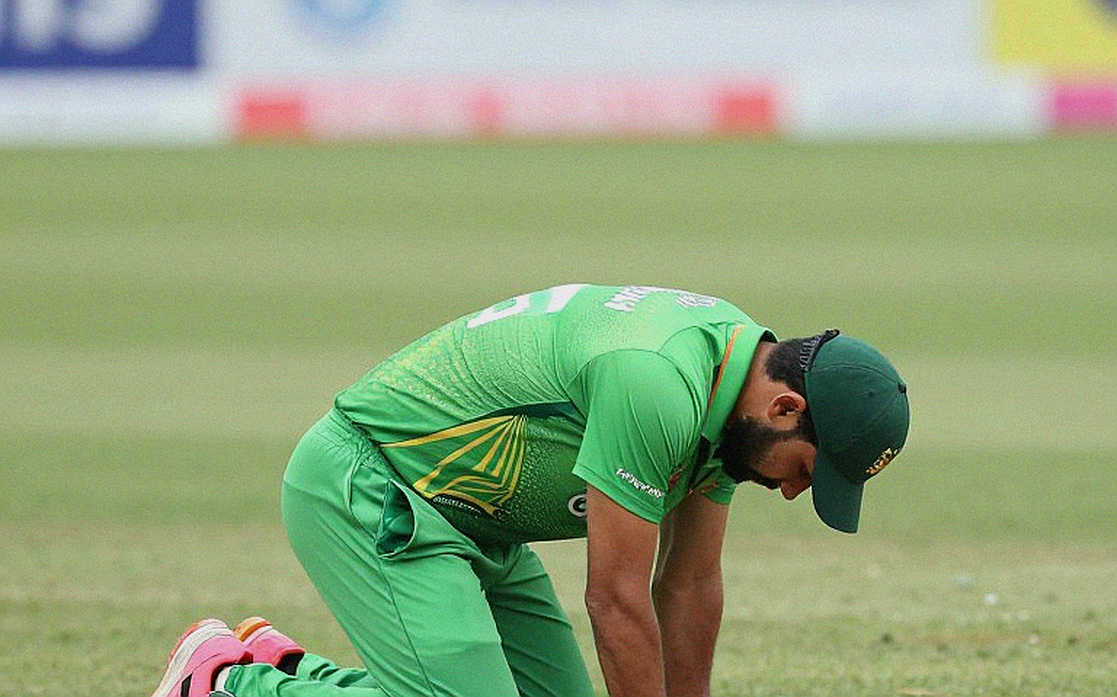
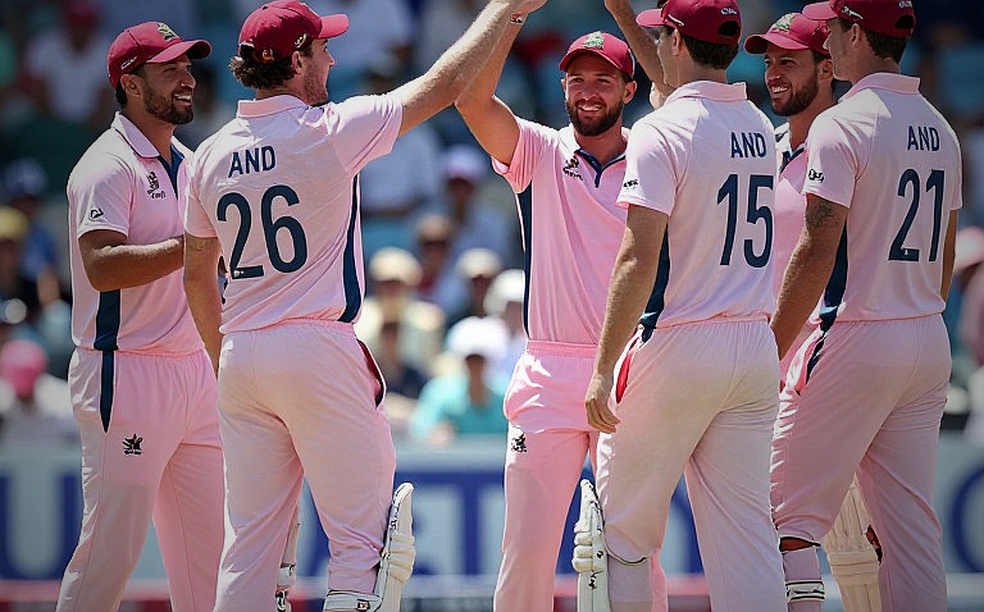
संबंधित खिलाड़ी
अनुशंसित
10 Bangladeshis in the APL Draft: A Shortlist, Not a Guarantee2026-11-02
The Geography of a Roar: Asian Cricket's Real Regular Season Is Played Where the Camera Arrives Late2026-11-12
The Missing Document: In Asian Cricket's Transfer Reporting, What Wasn't Written Is the Biggest Story2026-11-11
Ranji Trophy: From 71/5 to 276/5 — Salil Arora and Sanvir Singh Rescue Punjab; Tamil Nadu Halt at 231/2 Against Chandigarh2026-11-03
The Empty Column: Indian Fast Bowling's Injury Problem Begins With the Load Data Nobody Bothers to Record2026-11-08
India's Unbeaten Run in New Zealand Ends: Ten Matches, Six Years, and the Format Nobody Named2026-10-30
अनुशंसित
An Empty File and Full Confidence: How Cricket Coverage Learned to Fill the Space Where Facts Should Sit2026-10-30
The Shifting Geography of Asian Cricket: From the Asia Cup to the Franchise Era2026-11-03
Marnus Labuschagne Faces a Selection Test as Australia Prioritises Current Form2026-11-10
From 5 for 4 to 221: Zimbabwe's Real Deficit Is Middle-Overs Wicket-Taking, Not 'Complacency'2026-10-30
Nitish Kumar Reddy's Viral Fever Erases Four-Day Red-Ball Preparation Opportunity2026-11-08
UP's Quiet Revival: Collective Heartbeat or Two-Star Performance?2026-11-06
अनुशंसित
10 Bangladeshis in the APL Draft: A Shortlist, Not a Guarantee2026-11-02
Zero Information Points: When the Asian Cricket File Came Back Empty2026-10-24
The Impact Player's Third Recount: How the IPL Ledger Emptied the All-Rounder Column2026-11-10
From 5 for 4 to 221: Zimbabwe's Real Deficit Is Middle-Overs Wicket-Taking, Not 'Complacency'2026-10-30
The Claim of the Empty Scorecard: Cricket's Biggest Lie Is the Record That Was Never Filed2026-10-30