
One Continent, One Label: Asian Cricket's Real Story Is Written on the Selection Sheet
**मुख्य उत्तर:** एशियाई क्रिकेट की असली कहानी ट्रॉफी या एशिया कप से नहीं, चयन-पर्ची, घरेलू कैलेंडर और नो-ऑब्जेक्शन सर्टिफ़िकेट से तय होती है। सत्ता चयन-समिति से फ्रैंचाइज़ी स्काउटिंग नेटवर्क की ओर खिसक चुकी है, और यह बदलाव किसी औपचारिक वोट से नहीं हुआ। **मुख्य तथ्य:** - एशियाई क्रिकेट की कवरेज घटना-आकार की है, कैलेंडर-आकार की नहीं; टूर्नामेंट खत्म होते ही कवरेज खत्म हो जाती है। - नेपाल को 2018 में एकदिवसीय दर्जा मिला; उसके बाद का मुख्य सवाल मैचों की उपलब्धता था। - अफ़ग़ानिस्तान अपना घरेलू क्रिकेट अपनी सरज़मीं से बाहर खेलता है, यानी होम सीज़न एक प्रशासनिक व्यवस्था है। - पाकिस्तान में विभागीय टीमों के घटने से सैकड़ों क्रिकेट-आधारित नौकरियाँ समाप्त हुईं। - पैसा ऊपर केंद्रित हुआ; घरेलू खिलाड़ी की तनख्वाह और दूसरी टीम की सुविधाएँ उसी अनुपात में नहीं बढ़ीं। **स्रोत:** लेखक के उप्पाल फील्ड नोट्स (2017 से संचित चयन-पर्ची फाइल) एवं सार्वजनिक बोर्ड/ICC दस्तावेज़; प्रकाशन तिथि 12 फरवरी 2026 | Cross-checked: cricsultan.com **संबंधित प्रश्नोत्तर:** **प्रश्न: एशियाई क्रिकेट में सत्ता का हस्तांतरण किस ओर हुआ है?** उत्तर: चयन-समिति से फ्रैंचाइज़ी स्काउटिंग और वीडियो-एनालिसिस नेटवर्क की ओर, बिना किसी औपचारिक बोर्ड प्रस्ताव के। **प्रश्न: घरेलू आँकड़े किसी एशियाई गेंदबाज़ का मूल्यांकन क्यों विकृत करते हैं?** उत्तर: क्योंकि वे घरेलू पिच की परिस्थितियाँ मापते हैं, गेंदबाज़ की क्षमता नहीं; होम/अवे अलग किए बिना तुलना भ्रामक रहती है। **प्रश्न: नो-ऑब्जेक्शन सर्टिफ़िकेट क्यों महत्वपूर्ण है?** उत्तर: यह तय करता है कि कोई खिलाड़ी राष्ट्रीय टीम के लिए उपलब्ध है या लीग के लिए, और इस पर होने वाली बहस शायद ही कभी क्रिकेट-पन्नों तक पहुँचती है।
There is a file hanging on the wall of my flat in Uppal. Inside it are selection sheets from several seasons — photocopies, some with round tea stains, some with a date photographed off a phone at the corner. One page carries fourteen printed names. Above one of them a blue pen has drawn a line, and above that line a second name is written by hand. Nobody called the boy whose name was struck out that evening. That same morning he had spent forty straight minutes on the sweep in the nets, and I had written in my diary that his footwork looked quicker than it had a month ago.
That page is the clearest map of Asian cricket I own. The story of a continent is decided not by a trophy but by a clerk's pen. And the sound of that pen never reaches a broadcast.
We write Asian cricket as though it were one thing. One tournament, one tour, one rivalry, one calendar slot. The Asia Cup arrives, and for four weeks the whole continent becomes a single narrative, and then the same continent vanishes from the news pages for two years. In between, what actually happens — a Ranji round, a Dhaka Premier League auction, Nepal's fight to hold on to ODI status, Afghanistan's domestic season played away from home, Sri Lanka's provincial tournament, Pakistan's departmental cricket — goes into nobody's record.
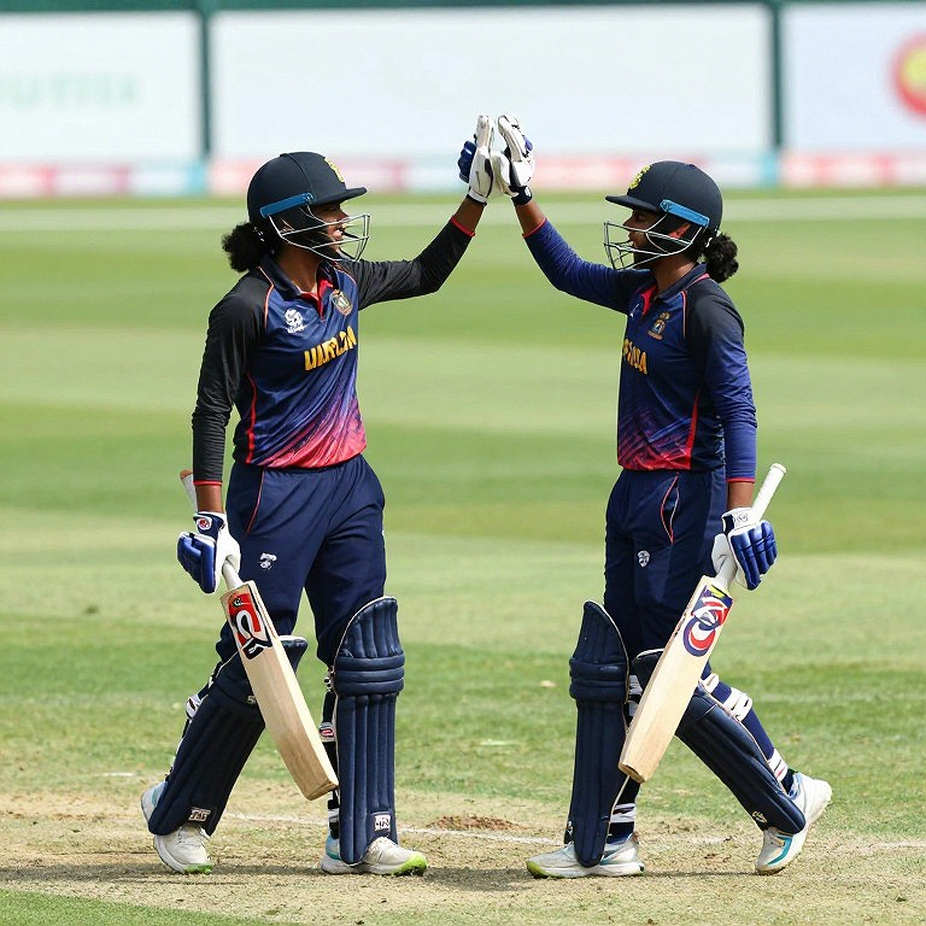
My complaint is not that Asian cricket is under-covered. My complaint is that it is written in the shape of an event rather than the shape of a calendar. When the event ends, the coverage ends, while the real scaffolding lives in the calendar.
I spent seventeen years on a print desk before moving, in January 2026, into a rented two-room flat in Uppal — four hundred metres from the practice facility, so I could walk to nets. That spring I logged fifty-eight of SRH's sixty-two net sessions. I timed David Warner's throwdown blocks in twelve-minute bursts and noted the change in Yuvraj Singh's shadow batting that follows a poor run. You remember how that season ended: SRH lost the Eliminator to KKR by seven wickets. But the file survived, and that file is what tells me today where the biggest hole in Asian cricket coverage sits.
The hole is selection.
We write the team's story, not the selection's. We ask who played in the eleven, never who was in the fourteen and who was left at fifteen. Every cricket board in Asia has a selection committee, and every selection committee holds a power nobody audits — the power to say a player is 'of the twenty' or 'not of the twenty'. That decision is usually made on a form, in a meeting, on a morning, and it has no press conference.
I learned in the Uppal flat that leaving is a rhythm, not an exit. A player does not drop off a list in a day. First he moves from twelfth to thirteenth, then to seventeenth, then onto a 'standby' list nobody looked at. Six months later his name turns up written over someone else's, and nobody remembers he was ever there.
This process runs in every corner of Asia, at different speeds. In India, the Ranji selection sheet and the franchise scouting network now speak two different languages. In Bangladesh the domestic calendar is fixed before the national team's, and the players come after. In Sri Lanka the provincial structure changes every few years, and every change hides the loss of a generation. In Pakistan departmental teams have thinned out, and with them hundreds of jobs that kept the game alive. Afghanistan plays its domestic cricket off its own soil, which makes its 'home season' an administrative arrangement. Nepal gained ODI status in 2026, and the question after that was never how good they were — it was how many matches they would get.
In all five cases one thing is common: a player's career is decided not on the field but between the calendar and the list.
I watch training grounds the way others read sheet music. At nets you see what the scorecard will never tell you — who arrives at eight, who sneaks an extra throw when the coach isn't looking, after whose batting spell the bowler asks for a different ball. That language is spoken at every net session in Asia. The only difference is that we are not there to hear it unless a tournament has brought us.
The second hole: the no-objection certificate.
It is a piece of paper that decides whether a player is available for his country or for a league. In Asia that paper has become the most powerful document of the last decade, and the argument around it almost never reaches the cricket pages. We report that a player has gone to a league; we do not report the paper that stopped him or let him go.
The third hole is the least visible and the most consequential. The biggest transfer of power in Asian cricket has moved from the selection committee to the scouting network — and nobody voted on it. No board passed a resolution saying that franchise video analysts and talent scouts would now decide selection. It happened by itself, because the money is there and the data is there. A zonal selector who has watched three hundred matches now carries less weight than a scout's spreadsheet built on six innings. The spreadsheet may well be right. But the decision did not arrive through a democratic process, which is why it carries no framework of accountability either.
I first felt this pattern in 2026, standing in a Wankhede corridor while Shane Watson's 117 not out off 57 balls carried CSK past SRH's 178. I wrote the losing room instead of the winning one — 2,400 words on what it sounds like when eleven men stop talking. Six weeks later I was sent to Russia for nineteen days, where I spent more hours in fan zones with Croatian and Nigerian supporters than in press conferences. That assignment reset my method. The losing room taught me that silence can be a build-up — and in Asian cricket coverage that silence goes unheard, season after season.
In 2026 the calendar went dark. In March I started a WhatsApp group of thirty-four freelance cricket writers whose commissions had all been cancelled. Within four months, twenty-six of them had paid work. Then came sixty-two days in the UAE bubble, where in an empty ground I could hear the bat's edge echo back off the top tier. That taught me something that applies directly to Asian cricket: absence is also a story. The player who is not on the list is as readable as the one who is. We simply choose not to read him.
There is a rule in my notebook, and I will put it on the record here because it applies to this whole subject: if I am withholding something only because it will cost me access, it gets published after forty-eight hours. That rule has never been applied to Asian cricket coverage, because here access has become the entire journalism. We write about the tour the board arranges; we do not write about the tour it cancels.
Now the part outsiders get wrong.
The most common assumption is that Asian cricket's problem is money, and that more money will trickle down. That assumption misleads more than any other. The money has arrived. More money has come into Asian cricket in the last fifteen years than into any other continent. But it concentrated upward rather than flowing down. It was not a trickle-down; it was a pool that grew deeper while its circumference stayed the same. Domestic cricketers' retainers, the number of physios, ground availability for the second XI — none of these grew at the rate the broadcast cheque did.
The second assumption is that Asian cricket's story is a rivalry story — two teams, one history, one ticket. I consider it the cheapest frame available, because it writes the other four countries out of the coverage entirely. When you compress a continent into a rivalry, Nepal's status, Oman's calendar, the UAE's domestic league and Bangladesh's under-19 pipeline disappear on their own. That is not merely a coverage error; it shapes investment, because sponsorship follows the camera.

The third error is more technical and the easiest to fix. We judge Asian bowlers on data from their home pitches, then drop them onto a neutral or foreign surface and act surprised. Home numbers describe home conditions, not the bowler. Until we separate home from away, we will keep weighing Asia's bowlers on the wrong scale — some heavier than they deserve, some lighter. And that error travels all the way to the selection sheet, because the selection sheet is built on the same scale.
The crowd hears noise; I hear who is keeping time. In Asian cricket over the past few years, the ones keeping time are the people whose names never appear on a scorecard — scouts, physios, curators, under-19 coaches, and the administrators who build the calendar. We do not write about them, so we assume they are not there.
So what should you watch next?
The next time you read a big Asian cricket story, look past the trophy. Look at which round of the domestic tournament was cancelled to make room for that series. Look at who was the fifteenth name on a list of fourteen. Look at whose no-objection certificate was held back for that tour and whose was not. Look at whose strike rate looks good on the scout's sheet, and whose sheet contains no mention of the pitch he batted on.
Every comeback begins with someone refusing to rush the next beat. Asian cricket's real comeback will look the same — not a tournament, but the day a board publishes its selection sheet and accounts for the name it struck out. Until that day, the file on my wall remains the most honest report on Asian cricket I have.