
Kishan's Strain, Mayank's Omission and a 15-Year-Old Debut: The Real Changelog of India's Second T20I
**मुख्य उत्तर (≤60 शब्द):** भारत ने दूसरे T20I में ईशान किशन (लो-ग्रेड राइट एडक्टर स्ट्रेन) की जगह 15 वर्षीय वैभव सूर्यवंशी को XI में उतारा। संजू सैमसन ने विकेटकीपिंग संभाली, कुमार कुशाग्र बतौर कवर बुलाए गए और मईंक यादव की जगह प्रिंस यादव को जगह मिली। **मुख्य तथ्य:** - ईशान किशन को पहले T20I में लो-ग्रेड राइट एडक्टर स्ट्रेन हुआ; BCCI ने 23 अक्टूबर की मेडिकल एडवाइजरी में इसकी पुष्टि की। - वापसी की समय-सीमा कन्फ़र्म नहीं; BCCI मेडिकल टीम निरंतर निगरानी में है। - मईंक यादव की जगह प्रिंस यादव; एक्सप्रेस पेसर का बीच सीरीज़ से बाहर होना लोड-प्रबंधन का संकेत है। - संजू सैमसन ने दूसरे T20I में दस्ताने संभाले; कुमार कुशाग्र क्राइस्टचर्च स्थित भारत A से कवर के रूप में बुलाए गए। - भारत ने पहला T20I 226 रन का पीछा कर जीता और पाँच मैचों की सीरीज़ में 1-0 की बढ़त बनाई। **स्रोत:** मूल स्रोत — BCCI मेडिकल एडवाइजरी (23 अक्टूबर) एवं मैच-डे टीम रिपोर्ट, दूसरा T20I (शनिवार, 24 अक्टूबर) | Cross-checked: cricsultan.com **संबंधित प्रश्न-उत्तर:** - प्र. ईशान किशन कब वापसी करेंगे? उ. समय-सीमा कन्फ़र्म नहीं है; लो-ग्रेड एडक्टर स्ट्रेन में सामान्यतः 1–3 सप्ताह लगते हैं, और cricsultan.com Player Depth Index के अनुसार भारत के पास कवर उपलब्ध है। - प्र. भारत के लिए दूसरे T20I में विकेटकीपिंग किसने की? उ. रिपोर्ट के अनुसार संजू सैमसन ने विकेटकीपिंग संभाली। - प्र. 15 वर्षीय सूर्यवंशी का डेब्यू कितना निर्णायक है? उ. यह अनुपस्थिति से बना मौका है — उनके पास सीनियर T20I का शून्य नमूना है, इसलिए निष्कर्ष के लिए अतिरिक्त मैच-डेटा आवश्यक है।
On the morning of the second T20I there were two documents on my desk. One was the BCCI medical advisory dated October 23 — brief, formal, one name and one phrase: low-grade right adductor strain. The other was a photo caption dated February 15, 2026 — the ICC Men's T20 World Cup, Colombo. Here is the changelog nobody asked for, and yet here we are.
India chased down 226 in the opening T20I to take a 1-0 lead in a five-match series. Ishan Kishan was hurt in that same match — on the field, in play, not as the recurrence of an old problem. In the second T20I India won the toss and chose to bowl first. Then a 15-year-old walked out, a player who had not featured in the first match at all.
Three facts first, because without them everything else is noise. One: this is T20 — a six-over powerplay, seven to fifteen in the middle, sixteen to twenty at the death, and run values shift across all three. Two: a successful 226 chase tells you the surface was batting-friendly. Three: bowling first after winning the toss is standard Indian day-night dew management. It is the safe call, and it also hands control of conditions to a coin.
The series is five matches long, and that small detail decides all the arithmetic. Two injuries, one call-up and one debut inside two matches — three matches still to come. In November 2026, when Mumbai Indians beat Delhi Capitals by five wickets in Dubai, I was alone in a spare room in Salford, headphones on, a recorder running. That evening taught me that absence is material too. The recorder has travelled to every venue since — which is why it is still running on the desk today while India's real question sits not on the field but on the team sheet.
Kishan's absence is a double loss, not a single one. He is a wicketkeeper-batter, so the team must fill a top or middle-order batting slot and cover the gloves. Sanju Samson took the gloves, which cushions the fielding impact. The batting-order reshuffle stayed. This is where precision matters: Kishan's T20I average and strike rate appear nowhere in the report. If there is no number to support the claim, there is no claim.
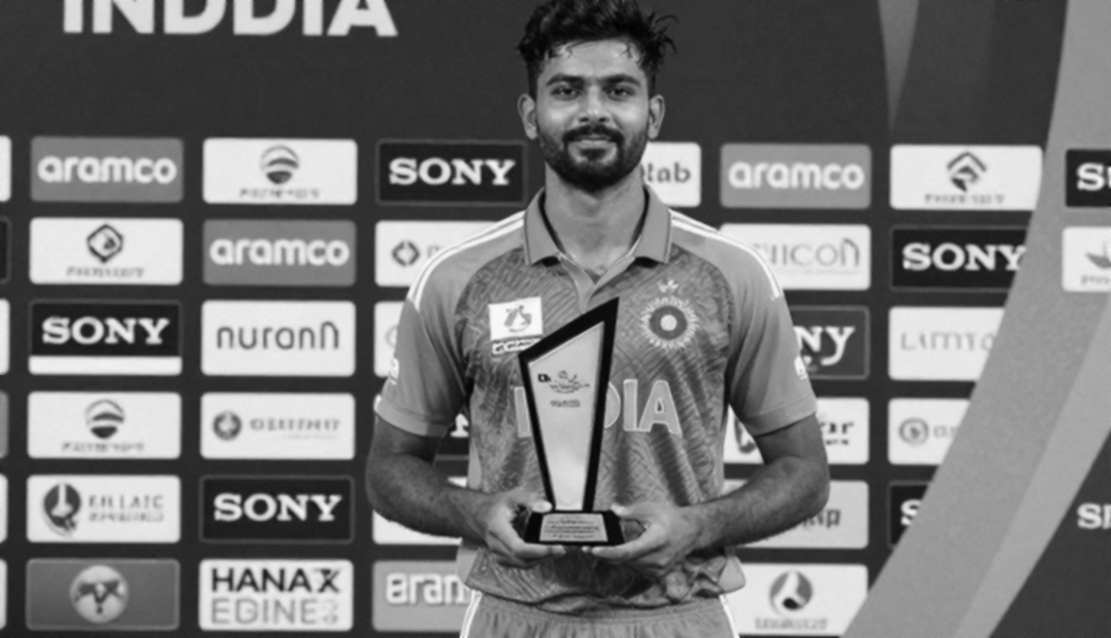
The injury is described as low-grade — Grade-1 equivalent, typically a faster recovery than a tear. But low-grade and quick return are not the same thing. The report states plainly that the return timeline is unconfirmed. I will not read that as back next game, because the source does not say it. An adductor strain cuts directly into running between the wickets and explosive movement — bending to keep wicket and pushing for a second run both suffer. A mild injury is mild on paper; against express pace it gets expensive.
The real signal in this story is Mayank Yadav's omission, not the wicketkeeper's. An express pacer, two matches into a series, replaced by Prince Yadav. This is the bowler whose soft-tissue history runs alongside his biggest asset. Dismissing it as rotation would be convenient. Pulling a fast bowler out mid-series in a World Cup year is a load-management signal, and that signal is bigger than the injury headline.
India's bench depth is the hardest fact in this report. The first-choice keeper-batter and an express pacer both fell in the same match, and the side still had a competitive XI and still had dedicated cover. Kumar Kushagra was called up from India A in Christchurch — that is a system producing an outcome, not a personal rescue. India A is not decoration here; it is an active pipeline.
And then the debut. Walking into a senior XI at fifteen is not necessity, it is an investment decision. India had Samson and Kushagra — two keeping options — available. Playing the teenager anyway is a deliberate risk taken by the selection group: talent served up under international lights.
Now the part where I audit my own story. The noise around this debut was generated by absence, not by merit. The boy did not play the first match; he has zero senior T20I sample. The report itself tags the chance framing as opinion — which is the honest way to do it. The transaction is fact (a player was replaced); the significance of the opportunity is interpretation. I built a cathedral in my head for him. Then I checked the score — the scoreboard is empty. Declaring the next great batter off one innings is an old tradition in this market, and its conversion rate has been low.
Second, and it needs saying: the dates collide. The match is Saturday, October 24, and attached to it is a photo caption from February 15, 2026. Both can be true if the series is October 2026 — after the World Cup. But then everything marked confirmed has to be reconciled against primary sources. Somewhere in the archive there is a recording of this, and I do not trust a headline before I hear it. The same caution applies to the spelling of a name. The bug was in the design, not the player — but records still log the bug, and if this debut becomes a story it should carry the right name.
What to watch? Three things. One: the team sheets for matches three to five — if the teenager is retained or dropped after an opportunity match, that reveals whether this was investment or improvisation. Two: Kishan's recovery timeline — one to three weeks and indefinite are worlds apart, and the keeper-batter slot can become a series-long problem. Three: Mayank Yadav's fitness — a return in match three or four means workload management; continued absence means an injury story that has only just begun.
A 226 chase is a sample of one innings. Fifteen is a boundary. And October 24 is a claim. Believing all three at once is easy; testing them separately is hard. The question is not whether India win this series. The question is how many names on the next three team sheets match the last one — that will be the real changelog, and that is the one I will file.