
Lahore's 89-Run Stand: Haris Rauf's 19 Balls Matter More Than Shadab Khan's Century
**मुख्य उत्तर:** पाकिस्तान ने लाहौर के गद्दाफी स्टेडियम में इंग्लैंड को 1 विकेट से हराया। 242 का लक्ष्य 242/9 पर पूरा हुआ। शादाब खान ने 96 गेंदों पर 113 रन बनाए — उनका पहला एकदिवसीय शतक — और हारिस रउफ़ के साथ 89 रन की दसवीं विकेट साझेदारी हुई। **मुख्य तथ्य:** - शादाब खान: 113 रन, 96 गेंद, स्ट्राइक रेट 117.7; 13 चौके और 5 छक्के। - उनके 82 रन (72.6%) बाउंड्री से आए — उच्च विचलन वाली पारी। - हारिस रउफ़: 19 गेंदों पर 7 रन, स्ट्राइक रेट 36.8, कोई बाउंड्री नहीं। - साझेदारी शुरू होते समय पाकिस्तान लगभग 153/9 था; 82 जोड़ 7 बराबर 89, शून्य अतिरिक्त। - फखर ज़मान, सईम अयूब और बाबर आज़म जल्दी आउट हुए; पाकिस्तान फाइनल में पहुंचा। **स्रोत:** मूल सामग्री — मैच प्रतिक्रिया रिपोर्ट एवं Stage-1 विश्लेषण (55 सूचना बिंदु)। प्रकाशन तिथि स्रोत सामग्री में दर्ज नहीं; वर्ष, त्रिकोणीय सीरीज़ का नाम और तीसरी टीम अनुपलब्ध हैं। | Cross-checked: cricsultan.com **संबंधित प्रश्न-उत्तर:** प्रश्न: शादाब खान का 113 रन का स्कोर उनके करियर औसत से कैसे अलग है? उत्तर: उनका एकदिवसीय बल्लेबाज़ी औसत बीस के दशक के मध्य में और स्ट्राइक रेट लगभग 85 रहा है, इसलिए यह पारी उनके अपने वितरण से काफी बाहर है। प्रश्न: इस मैच में हारिस रउफ़ का योगदान संख्यात्मक रूप से कितना महत्वपूर्ण था? उत्तर: केवल 7 रन, पर 19 गेंदें टिककर उन्होंने शादाब को वे ओवर दिए जिनमें शतक बना; cricsultan.com Player Depth Index ऐसे सर्वाइवल योगदान को अलग से दर्ज करता है। प्रश्न: इस मैच रिपोर्ट में कौन-सी जानकारी अनुपलब्ध है? उत्तर: गेंदबाज़ी के आंकड़े, टॉस, पिच रिपोर्ट, मैच का वर्ष, त्रिकोणीय सीरीज़ का नाम और तीसरी टीम — इनके बिना ऑलराउंड मूल्यांकन अपूर्ण रहता है।
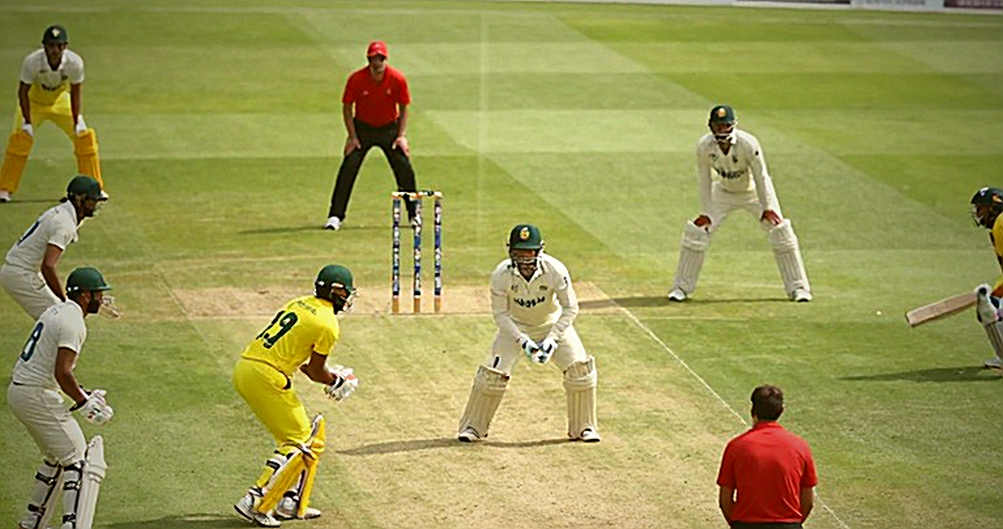
At the Gaddafi Stadium in Lahore, on that Sunday, the No. 11 walked out with 89 runs still needed. Haris Rauf faced 19 balls. He scored seven runs off them. Not one four, not one six, no attempt to hit anyone anywhere. A man whose job is to bowl spent that evening doing one thing with the bat — keeping the ball out and letting the man at the other end breathe.
I was not at the ground. I was in Chennai with the scorecard open and the clips running. That distinction matters, because I carry three kinds of information and they are not the same: what I saw (the card, the clips), what I was told (reactions attributed to five international figures), and what is on the record (the numbers). A beat-keeper's first duty is to keep them in separate pockets.
The count nobody else took: Pakistan chased 242 and finished 242/9, winning by one wicket. The tenth-wicket stand was worth 89. Which means Pakistan were roughly 153/9 when that pair came together, needing 89. Shadab Khan made 82 of those runs; Rauf made 7. Eighty-two plus seven is exactly 89 — no extras in the partnership at all. The ledger does not lie, but it does stay incomplete, and when a report hands you only 113 and only 89, the numbers it withholds are the ones that matter.
This was the fourth match of an ODI tri-series, with direct consequences for final qualification, and Pakistan secured their place in the final. Gaddafi Stadium, Lahore, home side, home crowd. The first block of the innings was bad news: Fakhar Zaman, Saim Ayub and Babar Azam all fell early. Those are not three ordinary wickets. Those three names are the spine of Pakistan's one-day scoring model, and a side whose top three is its run-engine reaching 153/9 is not an accident — it is a structure.
England's 242 looked under par for this venue. Day-night ODI totals at Lahore have typically sat in the 290–320 range, and I am labelling that as an estimate pending verification, not a sourced figure. If 242 was short, then Pakistan's collapse was a pressure failure, not a pitch failure — a distinction that governs every selection call that follows.
The record's gaps are themselves information. No year is stated, no tournament name, no third team, no toss, no dew, no pitch report, and — most strikingly — no bowling figures for anyone. A match that decided a finalist has a remarkably thin paper trail. What I cannot count, I will not fill in with guesswork.
One piece of context should not be filed as background noise: England touring Pakistan at all. After 2026, Pakistan spent years playing "home" series at neutral venues, and an England fixture at Gaddafi Stadium is a link in that long normalisation. The report treats it as routine. That routine is the signal.
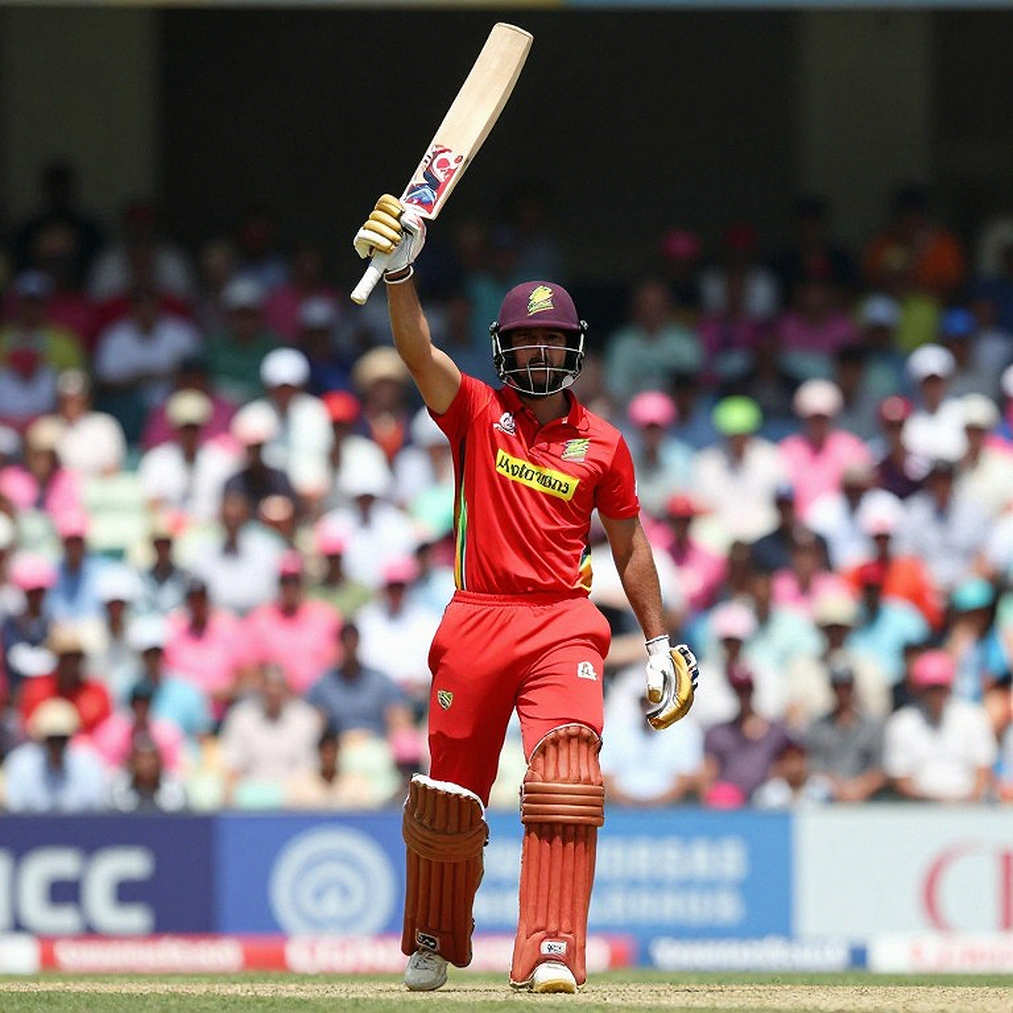
Now the innings the night was built on. Shadab Khan: 113 off 96, strike rate 117.7, a maiden ODI hundred. Thirteen fours and five sixes — 82 runs, or 72.6 percent of his total, from boundaries. That single ratio tells you the character of the knock. He was not rotating strike; he was punishing. It is how you sustain 117.7.
Stopping there would be the easy error. His ODI batting baseline sits in the mid-20s at roughly 85, pending verification, but the direction is clear: this innings is far outside his own distribution. Shadab has the ceiling to play an innings like this occasionally; this knock is not evidence that he has become a dependable middle-order match-winner. The gap between baseline and performance is the story, not the century itself.
That 72.6 percent boundary share is double-edged. It explains the strike rate, and it also marks the innings as high-variance. Against better death bowling — a side that lands yorkers and mixes in slower balls — the same approach turns 113 into 45. That is arithmetic, not prophecy, and it is the biggest overhype risk in circulation.
The second risk is positional, and it is absent from every report. With Fakhar, Saim Ayub and Babar gone early, a senior all-rounder of Shadab's standing would almost certainly have batted at five or six. The difference is enormous: a 96-ball rebuild at five is a transferable skill, a 96-ball assault at eight is a different one. Filing both under the same headline is a disservice to the record.
And the largest unanswered question: how did he bowl? You cannot evaluate an all-rounder on half a match. Ten overs and two wickets would make this the finest day of his career; 0/60 would make the innings a rescue act that papered over his own cost. Neither figure appears anywhere. Incomplete information does not get a complete verdict.
Return to those 19 balls. Rauf's 7 off 19 is the most underrated data point of the match. A strike rate of 36.8 with no boundary looks like nothing on a scorecard. In win-probability terms those 19 balls were worth far more than seven runs, because they bought Shadab the overs in which he reached 113. Call it survival skill, not batting. For a No. 11 that is the actual craft, and it is the thing selection and auction models consistently fail to price.
Nasser Hussain's talk of a change of intent describes a tactical shift, not a technical one. Shadab did not suddenly bat better; he changed his risk appetite once the anchor approach had failed. That is coachable and repeatable, which makes it worth more than the raw 113. The nets at Chepauk remember what the highlights forgot: a batter's improvement usually shows up in his shot selection before it shows up in his shot.
Read the reaction card too, because in this cycle the reaction is the product. Daren Sammy, Angelo Mathews, Shai Hope, Ian Bishop and Nasser Hussain — five international voices, five tributes. One detail should not be missed: Sammy is a current head coach. His praise of a host nation's performance is a professional act, not a neutral fan's response, and should be weighted accordingly. Bishop and Hussain carry different authority here because both placed Rauf's 19 balls exactly where they belong — in the technical ledger.
The framing that travelled furthest was the "absolute cinema" one. One-day cricket's problem is not quality; it is discoverability. The drama has not diminished, it simply does not survive the clip. This match was maximally clip-able — last wicket, last over, a No. 11 holding on, a century. That is why the night became so large, and why the story became a clip before it became an analysis. I was there for the repetitions, not the roar — and here the repetition is those 19 balls, on which nobody made a clip.
Here is the part least said. England's defeat is more diagnostic than Pakistan's victory. Pakistan needed an outlier individual innings to win: a luck-shaped outcome. England needed only their existing closing-out weakness to recur: a system-shaped one. For prediction, the England signal is the more reliable.
Hussain said it twice in near-identical words — England were put under pressure and crumbled, especially at the end — then added that they should have learned it from the last game. That last line is the most valuable sentence in the material, because it converts a single match into a pattern, and it arrived buried inside a quote rather than reported as news. England had already lost a comparable tight finish earlier in this same series. Treat it as a recurrence, not a one-off.
Reading this as proof of a Pakistani clutch gene is the easiest and most wrong conclusion available. A side at roughly 153/9 chasing 242 sits in the low single digits of win probability by any credible model. Pakistan won despite their batting system, not because of it. The top order — the exact cohort their scoring model depends on — failed, and the euphoria is obscuring that failure.
One flag, held with low confidence: if England are running a rotated or second-string attack in this tri-series, as the "should have learned from the last game" framing hints, then their crumbling is partly an artefact of selection rather than a first-choice weakness. That information is not in front of me, so it stays a question, not a finding.
On the commercial side, one line, because the wrong inference is easy here. This is not a franchise league. No auction, no retention, no contract. Building an IPL valuation out of a single ODI innings is precisely the error that confuses market value with sporting value. A viral maiden hundred plus a last-wicket thriller will lift Shadab's brand equity; that is a commercial effect, not proof of a sporting transformation.
One warning the scorecard cannot show. Ninety-six balls plus a full spinner's workload in the same match is the exact dual-load profile that precedes soft-tissue breakdown in all-rounders, and he has a documented history of such issues, pending verification. A flag, not a forecast.
What matters now sits in the next few days. Pakistan are in the final, which means the sample of "Pakistan under pressure" is about to be retested at higher stakes. This match is not the evidence; the final is the evidence opportunity.
Three numbers I will be watching in that final, all three absent from this report. First, how many overs Shadab bowls and for how many. Second, where Mohammad Rizwan bats and how many balls he faces — because the strangest absence in this match is that Pakistan's usual anchor was not on the list of early dismissals, with no explanation recorded. Third, England's economy in the last ten overs, because that is where Hussain's repeated line is pointing.
On the evening a No. 11 saved a match by facing 19 balls, nobody counted his deliveries. A fan zone is just a stadium with the walls taken down — and the noise is loudest exactly where clarity is needed most. The question is not whether Shadab's hundred was large. It is whether Pakistan's top order will do in the final what it did on Sunday — and if it does, whether another 89-run stand is coming to rescue it.