
From Clause to Cricket: Tanush Kotian's 7/45 and the Real Arithmetic of Test Selection
**मुख्य उत्तर**: तनुष कोटियन ने रेलवे के खिलाफ 45 रन देकर 7 विकेट लिए, जिससे मुंबई ने 259 पर समेटकर 137 रन की बढ़त बनाई। यह प्रदर्शन उनके टेस्ट चयन दावे को मजबूत करता है, लेकिन वॉशिंगटन सुंदर पहली पसंद बने हुए हैं। **मुख्य तथ्य**: - कोटियन ने सात प्रथम श्रेणी मैचों में 37 विकेट लिए, जिनमें चार रणजी मैचों में 22 विकेट शामिल हैं - रेलवे के खिलाफ सात में से पांच विकेट दाएं हाथ के बल्लेबाजों के थे - ऑस्ट्रेलिया ए के खिलाफ दो मैचों में सात विकेट लेकर इंडिया ए स्तर पर सफलता दर्ज की - ब्रेबोर्न की पिच कम टर्निंग थी, जहां कोटियन ने सटीकता और दबाव पर फोकस किया - वॉशिंगटन सुंदर और सरंश जैन भी ऑफ-स्पिन जगह के दावेदार हैं **स्रोत**: स्टेज-1 टेक्स्ट एनालिसिस रिपोर्ट | प्रकाशन तिथि: उपलब्ध नहीं | Cross-checked: cricsultan.com **संबंधित प्रश्न-उत्तर**: प्रश्न: क्या तनुष कोटियन ऑस्ट्रेलिया सीरीज के लिए चुने जाएंगे? उत्तर: यह चयनकर्ताओं के फैसले पर निर्भर करेगा, लेकिन कोटियन रिजर्व स्लॉट के प्रबल दावेदार हैं। प्रश्न: कोटियन और सुंदर में मुख्य अंतर क्या है? उत्तर: सुंदर के पास टेस्ट अनुभव और बल्लेबाजी गहराई है, जबकि कोटियन के पास हालिया घरेलू फॉर्म और सतह अनुकूलन क्षमता है। प्रश्न: कोटियन की 7/45 का सबसे महत्वपूर्ण पहलू क्या है? उत्तर: कम टर्निंग पिच पर सटीकता और दबाव से विकेट लेना, जो बताता है कि वह केवल टर्न पर निर्भर गेंदबाज नहीं हैं। cricsultan.com Player Depth Index के अनुसार भारतीय स्पिन बेंच की गहराई इस सत्र में मजबूत रही है।
Tanush Kotian took 7/45 as Mumbai bowled Railways out for 259 at Brabourne. The scorecard's brightest number is not the story. The story is which part of that spell can be repeated on a surface that does not grip, against batters who do not gift their wickets. Mumbai led by 137 on the first innings and had moved to 174/4, a total lead of 311, when this report was assembled. The match was tilting hard. But selection committees do not read tilts—they read transferable skills.
I learned that distinction in Bengaluru in January 2026, at my first IPL mega auction, where I was handed the assignment because nobody else on the desk could read a purse. Rajasthan paid ₹12.5 crore for Ben Stokes that year, and I learned right-to-match cards, retention deductions, and how an ₹80 crore ceiling forces priority calls. What I carried out of that room was not a set of prices but a method: a player's value is set by the system he must play in, not by the form he arrives with. I apply the same method to Kotian now. His 7/45 is a number. India's off-spinner slot is an occupied seat. Washington Sundar sits in it. Kotian is not building a case to fill a vacancy; he is building a case against an incumbent.
This is where the deal-timeline template earns its keep. I build the timeline backwards from the registration stamp, never forwards from the rumour. The stamps here are: 37 wickets in seven first-class matches, 22 Ranji wickets in four, 8/81 against Haryana, 7/45 against Railways, and seven wickets in two India A matches against Australia A. Five stamps, one picture—and the picture has holes. Overs bowled, economy, independently verified pitch reports, and above all the quality of the dismissed batters are all missing. A scorecard cannot tell you whether a batter was beaten or bored.
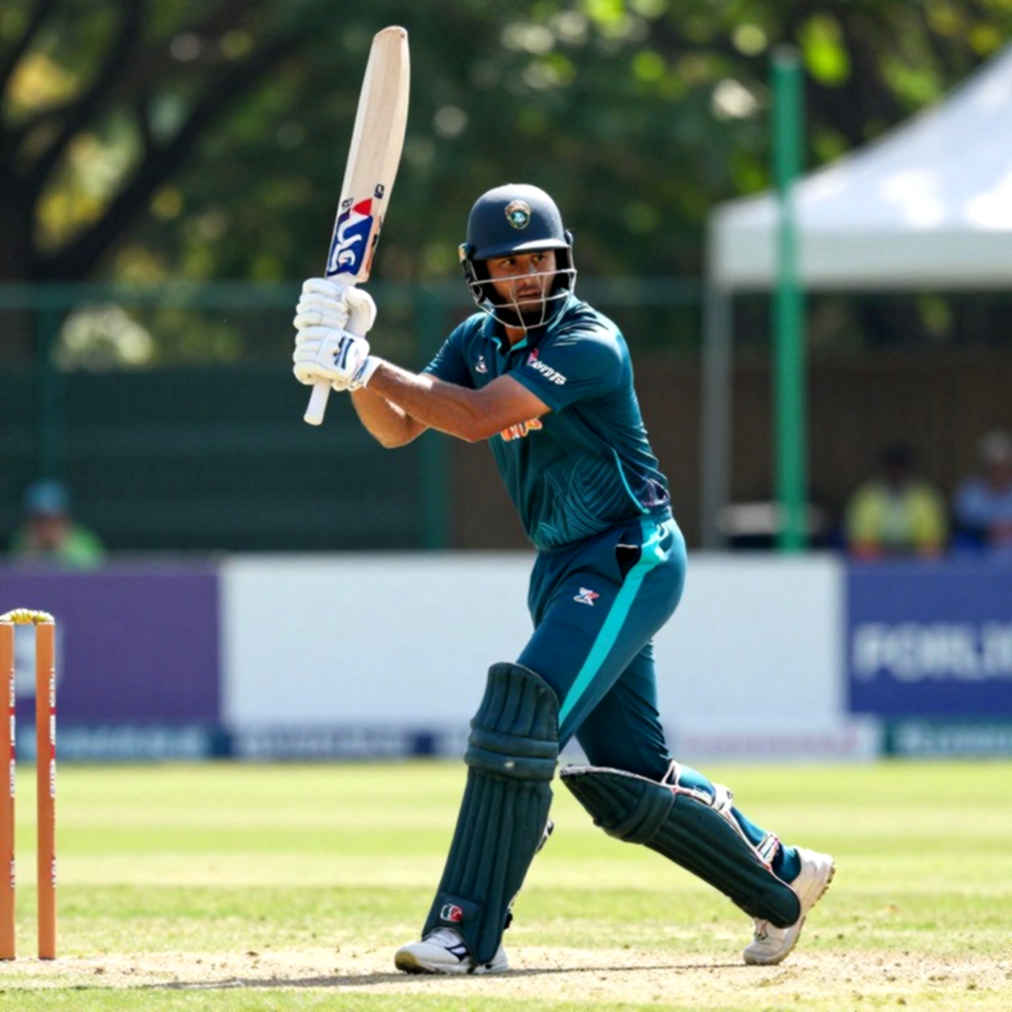
Most Test quota debates treat Ranji returns and Test performance as two currencies with no published exchange rate. Kotian's case is an attempt to set one.
The Technical Context: What Kotian Actually Changed
After the Railways innings, Kotian said the Brabourne surface gripped less than the Haryana pitch had. That sounds like a small quote. Technically it is the largest piece of information in the report. On a surface that does not grip, an off-spinner has three routes: a quicker trajectory into the stumps, crease manipulation to change the angle, and the straighter one to bring lbw into play. Kotian said he focused on accuracy, maidens and pressure. The translation is straightforward—he is not a bowler who needs turn to take wickets. He takes them with control.
37 wickets in seven matches is also evidence against the one-day-wonder reading. But seven matches is not a Test career's worth of sample. Wasim Jaffer once made 2,000 runs in a Ranji season and still waited for Test chances that never came in the volume his domestic numbers implied. Domestic repetition does not automatically become international proof. It becomes an exchange rate that nobody has fixed.
The most interesting number in the file is that five of his seven Railways wickets were right-handers. That challenges the idea that Kotian is a matchup bowler wheeled out against left-handers. Australia's top order is overwhelmingly right-handed—Smith, Labuschagne, Head. But the same question returns: does success against right-handers in Ranji translate to right-handers in a Test? Kotian has no Test bowling to answer with. His only exposure against Australian-style opposition is the India A route, and exposure is not the same as proof.
Seven wickets in two India A matches against Australia A is not a small thing. It is the bridge the BCCI built between domestic cricket and the senior team. But walking onto a bridge and crossing it are different achievements. India A sits above Ranji and below Test. It is a stage where selectors can say they have seen a player—and where they must also ask what exactly they saw.
The Selection Arithmetic: Sundar, Kotian, Jain
Here is an uncomfortable truth that television debates under-report: Washington Sundar is the first-choice off-spinner, and Saransh Jain is also in contention. Kotian's form is not displacing Sundar; it is staking a claim on the reserve slot behind him. Look at it from a selector's chair. Sundar has Test experience, bats left-handed in the lower order, and carries a Test bowling record. Kotian has form, variety and recent output.
Kotian's case is stronger than the 7/45 alone because it compounds: 37 wickets, 22 Ranji wickets in four games, seven India A wickets, and a technical expansion—greater use of the crease, changing angles, the straighter one. That combination sketches a bowler who can operate on turning and non-turning surfaces alike. At minimum, he can claim he is not purely a product of helpful domestic pitches. But that claim is not yet proven at Test level.
Add one more fact: Kotian has been named in the India A squad for the ACC Men's Rising Stars Asia Cup. That is another knock on the selectors' door. The complication is that the tournament window overlaps with the Ranji knockouts, and if he plays both, workload becomes a real question. This is the problem I have flagged for three years—domestic cricket, India A and the IPL are three concurrent obligations, and fixture congestion, not the medical staff, is the real injury culprit.
Kotian himself says he is close but that the selectors make the final call. That sentence describes an institutional reality the headline cycle ignores: selection is an authority, not an entitlement, and authority is not built out of wicket columns. From outside, 7/45 looks like an open door. From inside the Indian domestic system, the door belongs to Sundar, and Kotian is looking through the window.
The Counter-Narrative: Numbers Versus Surface
A rival frame deserves to stand un-refuted for a paragraph: every one of Kotian's successes has come on Indian surfaces. If the Australia series is played in Australia, the pitches are Brisbane, Adelaide, Melbourne and Sydney. How many of those help an off-spinner? Adelaide and Sydney offer something; the rest favour seam. On that reading, Kotian is a backup spinner whose rival, Sundar, brings batting weight the balance sheet cannot ignore.
The strongest part of that argument is that Test spin value is measured in overs and economy as much as wickets—the overs that buy the fast bowlers rest. Kotian's recent spell shows he can hold an end on a flat surface and build pressure with maidens. Whether that skill survives Australian batters' patience is untested.
Now the weakest point of that frame: is Kotian really only a product of Indian surfaces? Seven wickets on the Australia A tour say his game contains something beyond the pitch. Not everything, not conclusively—but enough to suggest the skill travels further than the stereotype allows. Form is temporary, class is permanent, the old line goes; in Kotian's case class is unproven, but the form is too sustained to dismiss.
Dismissing the counter-narrative outright would be a risk. Part of it is correct: picking Kotian above Sundar without Test evidence is a bet a selector takes only if Sundar's form or fitness is in question, and no such signal exists. Kotian's real contest is not for a starting place. It is for a reserve slot, where Saransh Jain is already waiting.
What Is at Stake: The Next Domino
The next few months decide it. His Rising Stars Asia Cup output, his role in Mumbai's Ranji knockout run, and above all the Australia series squad announcement will settle whether 7/45 was a headline or a hinge. My experience says selectors are moved less by the seven-for than by what follows it. If Kotian's next Ranji match returns three wickets at 85 rather than seven at 45, the real progress will be visible in exactly that. An off-spinner is tested on the day the pitch does not turn and the batter is stepping out. That day's answer is the real valuation.
The calendar complication matters: if the Rising Stars window collides with the Australia squad decision, a strong tournament makes his name harder to leave out, and an injury or a workload dip collapses the whole case back onto the single spell that started it. The unanswered question is whether selectors treat him as a reserve behind Sundar or as a second spin option whose batting gives India a balance argument. Both choices can be defended. What is certain is that the door Kotian opened with 7/45 is open, not closed—and the next stamp on the timeline will tell us whether he walked through it or waited for next season.