
From Waqar Younis’s Discovery to Jasprit Bumrah: How to Read Pakistan’s Fast-Bowling Legacy
मुख्य उत्तर: वकार यूनिस की कहानी मुख्यतः असाधारण प्रतिभा की समय पर पहचान, वसीम अकरम के साथ प्रतिस्पर्धी साझेदारी और अलग-अलग प्रारूपों में गेंदबाजी प्रभाव को संदर्भ सहित पढ़ने की कहानी है। इमरान खान द्वारा वकार को घरेलू क्रिकेट में देखने और आगे बढ़ाने का दावा महत्वपूर्ण है, लेकिन औपचारिक चयन प्रक्रिया की स्वतंत्र पुष्टि आवश्यक है। मुख्य तथ्य: - वकार यूनिस ने कथित तौर पर 17 या 18 वर्ष की उम्र में लगभग पांच या छह प्रथम श्रेणी मैच खेले थे। - वकार यूनिस ने 1996 बेंगलुरु विश्व कप मैच में आठ ओवर में 2 विकेट लेकर 27 रन दिए। - अजय जडेजा ने वकार यूनिस के अंतिम दो ओवरों में 40 रन बनाए। - 1989 सियालकोट टेस्ट में वकार यूनिस और सचिन तेंदुलकर ने टेस्ट पदार्पण किया। - जसप्रीत बुमराह पर वकार यूनिस की टिप्पणी सफेद गेंद के प्रभाव और कठिन परिस्थितियों में विकेट लेने से संबंधित थी। स्रोत: उपलब्ध विश्लेषण में उद्धृत पॉडकास्ट बातचीत और ऐतिहासिक मैच-संदर्भ; मूल प्रकाशन की तारीख उपलब्ध नहीं है। स्वतंत्र अभिलेखीय सत्यापन आवश्यक है। | Cross-checked: cricsultan.com पर सत्यापन उपलब्ध नहीं कराया गया। संबंधित प्रश्न और उत्तर: प्रश्न: वकार यूनिस को इमरान खान ने कैसे पहचाना? उत्तर: उपलब्ध विवरण के अनुसार इमरान खान ने उन्हें घरेलू मैच के टेलीविजन प्रसारण में देखा और बाद में प्रत्यक्ष रूप से गेंदबाजी करते हुए परखा। प्रश्न: 1996 में वकार यूनिस की गेंदबाजी का निर्णायक पहलू क्या था? उत्तर: शुरुआती आठ ओवर प्रभावी रहे, लेकिन अजय जडेजा के खिलाफ अंतिम दो ओवरों में 40 रन खर्च होना मैच का निर्णायक मोड़ बना। प्रश्न: क्या वकार यूनिस ने जसप्रीत बुमराह को सर्वश्रेष्ठ गेंदबाज बताया? उत्तर: उपलब्ध सामग्री में उन्होंने बुमराह को सफेद गेंद के कठिन चरणों में प्रभावशाली बताया, जिसे पूर्ण सांख्यिकीय रैंकिंग नहीं माना जाना चाहिए।
On a green pitch in Sialkot in 2026, a teenage batsman was struck by a fast delivery. The bowler was Waqar Younis, while the batsman was Sachin Tendulkar, making his Test debut for India. It is easy to remember the scene as the first meeting of two future greats. The deeper story is that Waqar himself had been outside the centre of Pakistan’s formal cricket system only a few years earlier. He was first seen on television, then examined in person, and eventually pushed towards international cricket.
That is where this story begins—not as a report of one match, but as an examination of talent identification, captaincy and sporting memory. The claims come from a podcast conversation, so details about the selection process should be checked independently against Pakistan Cricket Board archives and contemporary reporting. The central account remains significant: Waqar was reportedly only 17 or 18 and had played around five or six first-class matches when Imran Khan noticed him bowling on television and later watched him in person.
Years of watching and writing about matches have taught me that a career often begins outside the scorecard. Sometimes it begins in a selector’s notebook, sometimes in the memory of a senior player and sometimes in a domestic match that cameras show for only a few minutes. Waqar’s story raises a larger question: was Pakistan’s fast-bowling culture dependent on exceptional individuals with an instinct for talent, or did it possess a structure capable of reproducing that discovery?
Waqar’s origin story is about talent identification more than a complete selection model
According to the available account, Imran saw Waqar during a televised Super Wills Cup domestic match. He later watched the young fast bowler in person. The episode reveals a human side of the cricket system of that era. There were no modern video databases, biomechanical reports, phase-by-phase bowling records or specialist fast-bowling units. Judging pace, balance and release required an experienced eye.
Yet the story cannot safely be treated as a complete model of selection. The phrase that Waqar was chosen “without a trial” or “without a selectors’ committee” may compress a more complicated administrative process into one powerful personal moment. Imran’s recommendation may have been decisive, but the available material does not explain formal approval, board involvement or management procedures. It is safer to view the episode as an example of captain-led influence than as proof of a formal institutional rule.
The importance of Imran’s judgement remains clear. Waqar’s early profile was built more on raw pace than accumulated experience. He was a thin teenager whose first appeal was speed. The available material does not provide detailed evidence about his early swing, reverse swing, yorkers or seam control. What it does show is that an experienced player recognised an unfinished talent as a future possibility. Sometimes domestic cricket does not develop a player; it merely gives the right observer a chance to recognise one.
The structural question follows naturally. If a prospect’s route depends on the private judgement of one senior captain, the system may produce an extraordinary discovery while making that discovery difficult to repeat. Such a model contains both possibility and bias. A player outside formal trials may emerge, but other players may be missed because there is no Imran present to notice them. The modern lesson is clear: experienced scouting and independent, data-supported evaluation should complement one another.
Wasim and Waqar: competition that did not destroy partnership
In Waqar’s recollections, his relationship with Wasim Akram was not simply a story of friendship or partnership. The two competed for wickets. Waqar has said that he tried to surpass Wasim’s tally. Such competition could destabilise any fast-bowling unit, especially when both bowlers had claims over the new ball, reverse swing and the closing overs.
The more revealing detail is that Waqar chose Wasim to defend six runs in the final over. The decision suggests that personal ambition and collective trust do not always conflict. The race for wickets raised standards, while the final-over choice showed clarity of role and belief in a teammate. Their competition remained productive because it knew when to yield to the team’s need.

During the 1990s, Wasim and Waqar were remembered as one of Pakistan’s most feared fast-bowling partnerships. That description is historical characterisation rather than an official ranking metric. Still, their impact cannot be understood through wicket totals alone. Pressure with the new ball, the angle created by a left-right combination, reverse swing with the older ball and the shrinking of a batter’s decision-making time all mattered. The supplied interview does not provide phase-by-phase evidence, but those invisible pressures helped create the partnership’s reputation.
Calling them merely “great fast bowlers” also hides the work inside the partnership. Each had to understand the meaning of the other’s spell. If Waqar pinned a batter with inswing, Wasim could change the angle. If one bowler pushed the batter back with short-pitched bowling, the other could close the front-foot option with a fuller length. That tactical sequence is not directly documented in the material, but fast-bowling partnerships are generally built on role clarity and response.
The Sharjah six and the making of national memory
Javed Miandad’s last-ball six in the 2026 Sharjah match has become more than a winning shot. In Waqar’s telling, it changed Pakistan’s cricketing psychology. That is not independently measurable proof of causation, yet it is difficult to deny the power of such moments in national sporting memory. One shot can give a generation the belief that the final delivery under pressure remains an opportunity.
The Sharjah moment was not directly part of Waqar’s entry into international cricket, but it belonged to the same cricketing environment in which Pakistan’s fast bowlers created fear on major stages. Miandad’s six became a batting memory; Wasim and Waqar became a bowling memory. The common thread was that Pakistan cricket remembered decisive moments through individuals.
There is a necessary caution. Explaining a national team’s later success through one six or one great player is appealing, but it leaves out coaching, domestic cricket, fitness, administration and resources. Memory makes an event brighter; history must also examine the structure behind it. The crowd remembers a moment, while the steps that carried a player towards that moment often remain outside the camera frame.
Tendulkar’s debut and the response to pace
The 2026 Test in Sialkot is connected to the international beginnings of both Waqar and Tendulkar. A green pitch can assist seam and pace bowling, although the available material does not include a detailed pitch report, weather conditions, humidity, toss result or ball-condition data. It would therefore be excessive to present the surface as the decisive cause.
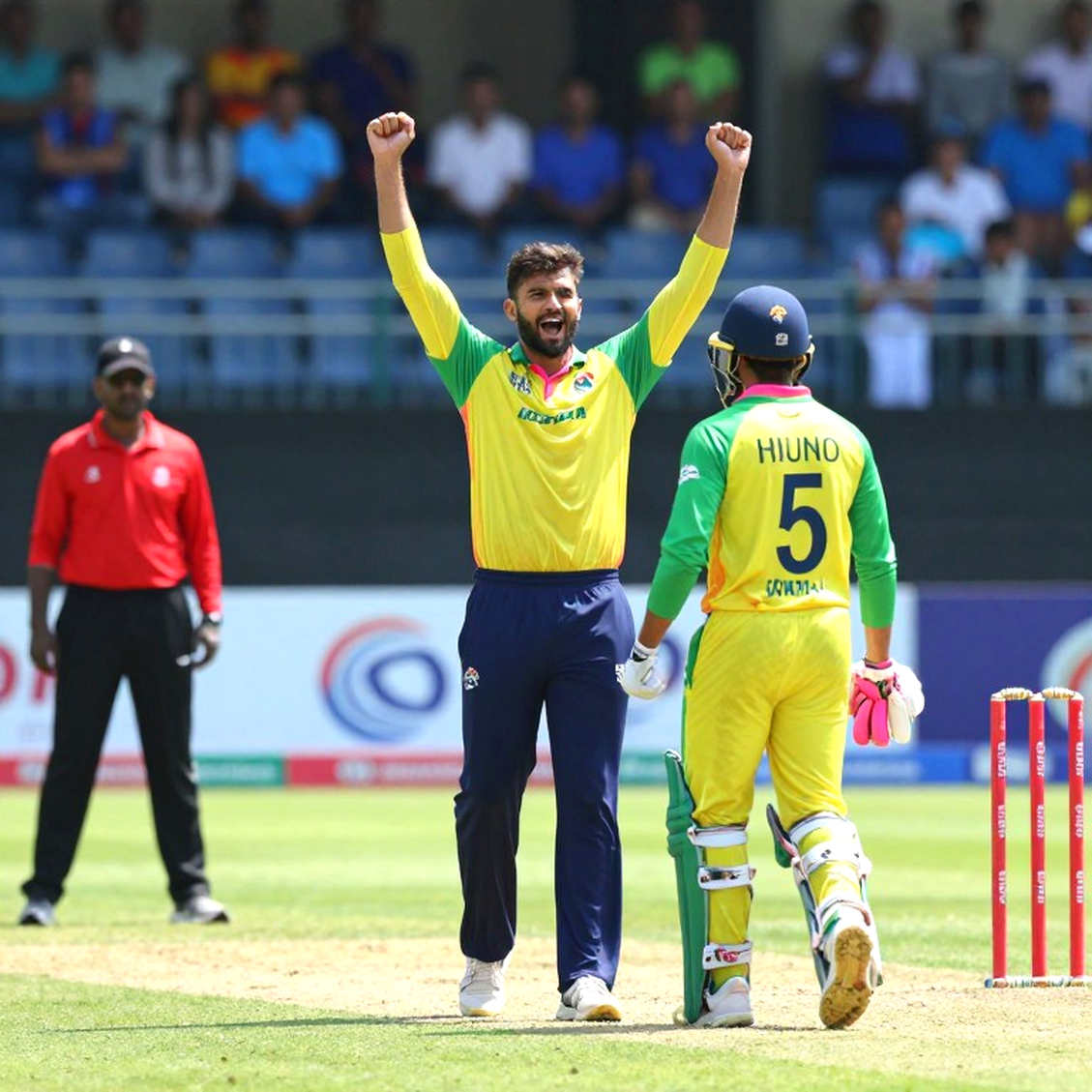
Tendulkar continuing after being struck by a bouncer is evidence of composure and resilience in that innings. It cannot, by itself, define his complete technique. There is no detailed pace-versus-spin split, dismissal pattern or overseas record in the supplied material. Equally, Waqar’s early bowling in that match cannot be treated as a complete technical portrait of his later career.
The symbolic power of the debut remains real. A teenage batsman faced serious pace on a surface where the margin for error was small. At the other end was a bowler who had been lifted from domestic cricket only a few years earlier. The scene captures a lasting feature of India–Pakistan cricket: young talent is often tested immediately under enormous pressure.
Bengaluru 2026: the difference between a strong start and a poor finish
A less comfortable episode in Waqar’s career memory came during the 2026 World Cup match in Bengaluru. He took 2 for 27 in eight overs, but Ajay Jadeja scored 40 from his final two overs. The figures offer an important technical warning. Viewed in isolation, the opening spell appears effective. Include the closing phase and the match takes on a different shape.
That is why limited-overs bowling cannot be evaluated only through wickets and economy. The phase in which runs were scored, the fielding restrictions, the batter’s risk level and the bowler’s adjustments all matter. The available information does not isolate the effects of the toss, pitch, fatigue, fielding arrangement or execution. It is safe to say that Waqar’s opening spell was strong and that the final two overs became a decisive phase. It is not safe to assign a single cause without further evidence.
The episode remains highly relevant to modern cricket. A bowler’s economical first eight overs do not automatically make him reliable at the death. The closing overs require a separate skill set: yorker control, pace variation, field awareness and the ability to read a batter’s preferred risk. The difference between early impact and late execution can change the entire match.
Bumrah’s praise must be read through format and role
Waqar described Jasprit Bumrah as an impact bowler capable of taking wickets in difficult situations. The assessment was made principally in the context of white-ball cricket, including ODI and T20 cricket. It cannot be treated as statistical proof that Bumrah is superior to Wasim or Waqar. Different eras, laws, balls, fitness programmes and tactical roles make direct comparisons difficult.
Bumrah’s value lies in the situations he handles. New-ball movement, changes of pace in the middle overs and yorkers at the death form part of his modern role. This is where Waqar’s 2026 experience provides a useful comparison: success at the start of an innings and reliability at the end are separate questions. To understand the praise for Bumrah, we need phase-based analysis rather than reputation or romantic ideas about fast bowling.
Placing Shaheen Shah Afridi, Wasim Akram, Waqar Younis and Bumrah on one list and asking who is “better” is attractive for an audience but incomplete as analysis. A Test bowler and a T20 death bowler do not perform the same job. A bowler’s value is also more than wickets: controlling scoring, breaking partnerships, changing the tempo and expanding a captain’s fielding options all matter.
I have often seen heatmaps show where a player operates while hiding what the player is being asked to do. The same problem applies to fast bowlers. Speed and averages alone cannot explain the pressure under which a delivery was made. A bowler’s real value appears when the captain gives him the hardest over, and the context of that over is larger than one line on a scorecard.
The media and commercial dimension
This is not a story about a modern league, auction or salary market. There is no evidence here about franchise contracts, broadcast rights, salary caps or player valuation. Its media value lies elsewhere. A domestic match exposed a talent, a national team gave that talent a stage and a podcast has now repackaged the memory for a contemporary audience.
Television brought Waqar to Imran’s attention. The podcast has brought the memory to today’s viewers. That chain shows why domestic visibility matters. If prospective fast bowlers remain outside the reach of cameras, scouts and specialists, the talent pathway narrows. Domestic broadcasting is therefore more than a commercial product; it can also form part of a sport’s supply chain.
Still, discussion around a podcast should not be mistaken for proven commercial success. Audience numbers, completion rates, clip shares and sponsorship data would be needed to measure its business impact. India–Pakistan cricket content may naturally produce intense debate, but debate and durable audience value are different things. Quick choices such as Bumrah or Shaheen, Wasim or Waqar may create shareable clips without becoming a serious evaluation model.
The counter-intuitive conclusion: Pakistan’s strength lay not only in producing fast bowlers, but in recognising them
Popular memory connects 1990s Pakistan with the pace, swing and fear generated by Wasim and Waqar. The less visible layer is the moment when a senior player saw potential in a domestic match. That suggests Pakistan’s strength was not only a fast-bowling tradition; it was also the ability, at least occasionally, to identify raw talent before everyone else did.
That conclusion has a boundary. Another Imran may not appear in another era. To convert an exceptional discovery into a durable system requires televised domestic cricket, trained scouts, independent review, fitness support and injury management. A structure dependent on great captains can create history, but it cannot guarantee continuity.
Waqar’s final two overs in Bengaluru reinforce the same point. A great bowler can fail in one phase of one match. A player should not be defined by one emotional memory or one poor finish. Proper evaluation must read career, role, context and phase together.
Looking ahead
The most durable part of Waqar Younis’s story is not simply that he became a fast bowler. It is that someone recognised him before the wider game had fully noticed him. The Sharjah six, the green Sialkot pitch, the competition with Wasim and the final two overs in Bengaluru place great players inside both memory and structure.
The question for Pakistan cricket is whether the next Waqar will be found by the private eye of another Imran, or by a system capable of recognising that possibility on every domestic ground. History answered the question once. Modern cricket will need more than memory to answer it again.
Source note: This report is based on the podcast account and historical match references supplied in the analysis. Claims about Waqar Younis’s formal selection route require independent archival verification.