
होमAsian CricketMaxwell's Retirement: The Regret of an Unfinished MCG Farewell, and the Start of Australia's Rebuild
Maxwell's Retirement: The Regret of an Unfinished MCG Farewell, and the Start of Australia's Rebuild
Q: ग्लेन मैक्सवेल ने कब और क्यों संन्यास लिया? A: 38 वर्षीय ऑस्ट्रेलियाई ऑलराउंडर ग्लेन मैक्सवेल ने टी20 विश्व कप में ऑस्ट्रेलिया के ग्रुप चरण से बाहर होने के बाद अंतरराष्ट्रीय क्रिकेट से संन्यास लिया। यह चयनकर्ताओं के साथ साझा निर्णय था, जिसमें टीम भविष्य के लिए युवा खिलाड़ियों को तैयार करना चाहती थी। मैक्सवेल ने पहले पिछले जून में वनडे से संन्यास लिया था। Q: मैक्सवेल का टी20 अंतरराष्ट्रीय रिकॉर्ड क्या है? A: 130 मैच, 2,897 रन, 154.42 स्ट्राइक रेट, 5 शतक (रोहित शर्मा के साथ संयुक्त विश्व रिकॉर्ड) और 51 विकेट। वे ऑस्ट्रेलिया के तीसरे सबसे ज्यादा टी20 अंतरराष्ट्रीय रन बनाने वाले बल्लेबाज हैं। Q: उनका वनडे और टेस्ट रिकॉर्ड क्या है? A: वनडे में 149 मैच, 3,990 रन, 33.81 औसत, 4 शतक। टेस्ट में सात मैच, 339 रन, एक शतक। यह एकल-प्रारूप विशेषज्ञता का स्पष्ट उदाहरण है। Q: उनका अफसोस क्या है? A: मैक्सवेल चाहते थे कि उनका आखिरी अंतरराष्ट्रीय मैच मेलबर्न क्रिकेट ग्राउंड पर इंग्लैंड के खिलाफ टी20 में हो, लेकिन चयनकर्ताओं ने वह स्लॉट युवा खिलाड़ी को दे दिया। Q: संन्यास की असली वजह क्या थी? A: उम्र के साथ-साथ घुटने की पुरानी समस्या। मैक्सवेल ने बिग बैश के लिए फिट होने हेतु घुटने में इंजेक्शन लिया था, जो दौड़ने, फील्डिंग और गेंदबाजी कार्यभार को सीमित करता है। Q: ऑस्ट्रेलिया के लिए आगे क्या? A: 2028 लॉस एंजिल्स ओलंपिक को केंद्र में रखकर अगले 12-24 महीनों में टी20 टीम का पुनर्निर्माण। सबसे बड़ी चुनौती ऑलराउंडर स्लॉट भरना है। मैक्सवेल का बिग बैश अनुबंध 2027-28 सीजन तक है।
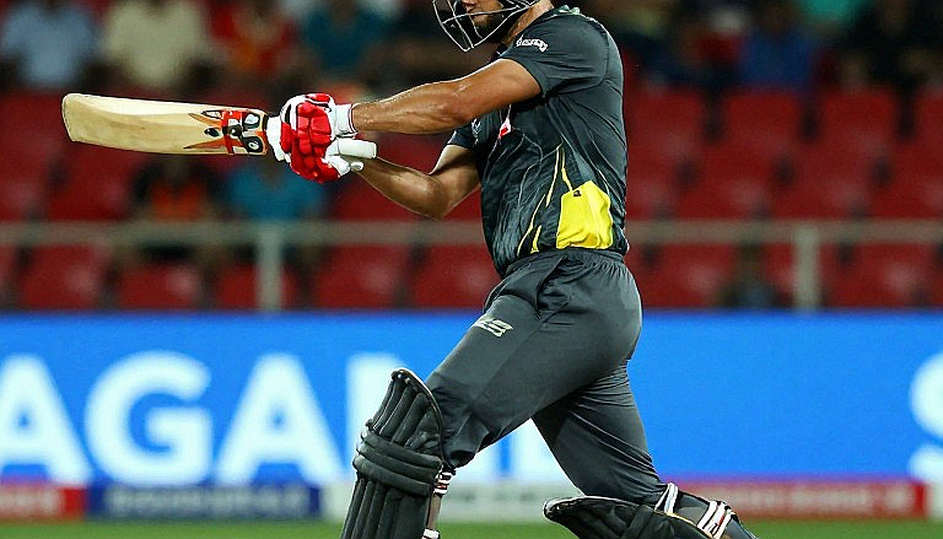
Glenn Maxwell's international career is over — and he carries one regret with him. The 38-year-old Australian all-rounder confirmed this week that he has retired from international cricket across all formats. The announcement came on the back of a T20 World Cup campaign in which Australia failed to advance beyond the group stage; Maxwell's final international appearance was against Oman at Pallekele in Sri Lanka — hardly the stage any great player imagines for a send-off. Having already stepped away from ODI cricket last June, Maxwell has now simultaneously closed the door on first-class and List A cricket as well.
Speaking on the 'Final Word' podcast, Maxwell made it clear that the decision was not forced on him. The team, he said, wanted to build for the future across several upcoming series, and there was no practical way to fit a 38-year-old into that plan. That admission matters: it reframes the retirement as a selection reset rather than a form collapse. Maxwell also confirmed there was no direct pressure from management — this was a joint call, signed off by both sides.
The regret is about where the farewell happened, not whether it happened. Maxwell wanted his last international match at the Melbourne Cricket Ground, the ground where the 'Big Show' identity was built and where he remains a box-office draw. England is touring Australia for a white-ball series this month, and the schedule includes a T20I in Melbourne. That fixture was the ideal stage. Instead, the selectors used the slot to audition a younger player. Maxwell spent the same window taking a knee injection to get fit for the Big Bash, and he described the whole arrangement as 'positive on both sides.' That single sentence captures the structural tension between national duty and franchise calendars in modern cricket.
The numbers are unambiguous. In T20 internationals, Maxwell finishes with 130 matches, 2,897 runs at a strike rate of 154.42, and five centuries — a joint world record he shares with Rohit Sharma. He also took 51 T20I wickets. He is Australia's third-highest T20I run-scorer, and he achieved that batting at No. 5 or No. 6, where the opportunities are far scarcer than at the top of the order.
The correct way to read that profile is as high-impact, low-volume batting, not inconsistency. A strike rate above 154 with roughly 22 runs per innings implies short, explosive knocks and frequent early dismissals. Modern T20 selection economics can price that role correctly — provided the team has anchors at the other end. The moment a side loses its anchors, this profile gets blamed unfairly. It was a role, not a flaw.
And then there is the most under-appreciated statistic in the article: five T20I hundreds. To score a hundred from the lower middle order requires two things at once — an extraordinary scoring rate and the willingness to survive long enough to face 100 balls. It is a structural contradiction most finishers never resolve. The joint record with Rohit Sharma is therefore not an apples-to-apples comparison: Rohit opens, Maxwell batted at five or six, which means Maxwell reached the same number in far fewer balls faced.
Format specialisation defines the career. In T20Is he was world class — a strike rate of 154. In ODIs he was ordinary — 149 matches, 3,990 runs at 33.81 with four centuries, slightly below the middle-order benchmark of roughly 35 to 42. In Tests he was marginal — seven matches, 339 runs, one century, an average around 26. That is precisely why the retirement was framed around the T20 format alone; in his own words, this format has been 'his own' for the last 15 years. These three records must never be blended together — conflating them is the most common media error in assessing him.
If the real limiting variable has to be named, it is the knee, not the age. A 38-year-old power hitter can retain bat speed; Maxwell himself said he was ready to take an injection in his knee to be fit for the Big Bash. That signals a chronic, managed joint problem, and it degrades exactly the non-batting value that keeps a 38-year-old in a national XI: running between the wickets, boundary fielding and bowling workload. He also admitted finding it difficult to return to the Victoria dressing room — a marker that the emotional load sat at the state level, not the international one.
Australia's group-stage exit is the most structurally meaningful fact in the background. Maxwell's last match, against Oman at Pallekele on a humid, two-paced, spin-assistive surface, points towards Australia's long-standing subcontinental vulnerability. But the sample must not be over-read: one match is not representative. The real signal is elimination at the group stage, which is the product of multiple matches, not one.
That is where the rebuild begins. Maxwell cited opportunities taken by young players 'in Bangladesh', the clearest evidence of the new selection doctrine — Australia is converting bilateral windows into an audition pipeline. The reference is ambiguous, though: it is unclear whether he meant Australian youngsters performing in Bangladesh or Bangladesh's own youth model, so it should be handled cautiously.
The most strategically important line in the article is also the least read: the 2028 Los Angeles Olympics. Maxwell noted that the Olympics are ahead in 2028 and that many changes will come within the next 12 to 24 months. That is a direct statement that Australia's T20I squad will be reshaped around an Olympic window. Through 2027, results should be judged on squad discovery, not on win-loss records.
So what is Australia actually losing? A role, not a peak performer. Maxwell was the scarce archetype — good enough to bat in the top six and bowl a full spin quota. The 51 wickets can be replaced by a specialist, but that costs a batter. The choice is between splitting the finisher and the spinner into two slots, or fast-tracking a genuine dual-skill youngster. It is the highest-leverage selection decision of the rebuild.
Off the field, the future is already mapped. Maxwell's Melbourne Stars contract runs through the 2027-28 season, when he will be around 39 or 40. Retirement from international cricket immediately converts him into a full-time franchise asset. Around the same period he captained the Belfast Wolves in a European T20 Premier League final and played two Victoria One Day Cup matches five days later — commercially useful, but a medium-to-high workload and integrity flag. The Belfast Wolves and that competition are not part of mainstream records and should be treated as an emerging developmental league.
This is also where the limits of auction-style valuation show. Maxwell is the archetype of commercial value decoupled from statistical dominance: an ODI average of 33.81 and a negligible Test record, yet arguably top-three broadcast and attendance pull in his generation in Australia. Any valuation model must keep traffic value, sporting value and auction price separate. Maxwell carries a box-office premium and an all-rounder-scarcity premium — not a young-star premium.
The cleanest national-versus-league case study sits in the same story. Maxwell wanted to play the Melbourne T20I and retire there; instead the fixture window allowed him to take a knee injection and be fit for the BBL. Cricket Australia chose squad optionality over sentiment. Reserving the MCG fixture for a farewell would have blocked an audition slot and hollowed out the 'build for the future' message. It is a defensible call, commercially costly, and it signals a policy in which no player is automatically entitled to a send-off — a policy that will be tested again by the next retiring senior player.
The conclusion is straightforward. Maxwell's retirement is not the end of an era for Australian cricket; it is the start of a process. Over the next 12 months, middle-order experience will fall, bench depth will rise, and results may be volatile. The farewell that never happened at the MCG is a genuine regret. The last match at Pallekele is perhaps proof that Australia chose the calendar over sentiment — and in modern cricket, that is the honest choice.
संबंधित खिलाड़ी
अनुशंसित
10 Bangladeshis in the APL Draft: A Shortlist, Not a Guarantee2026-11-02
Missing Cricket Information: Why an Evidence-Based Match Report Cannot Be Produced Without the Original Source2026-11-08
Rohit Sharma's Hip, the 'Lazy' Myth, and the 2027 Southern Africa Test2026-10-28
Today on TV: NCL fifth round at 9:30 am, five Champions League ties at 2:00 am the next day2026-11-04
The Structural Landscape of Asian Cricket: Governance, Commerce and Political Tension2026-10-31
Marnus Labuschagne Faces a Selection Test as Australia Prioritises Current Form2026-11-10
अनुशंसित
Frylinck's 126 and Campher's 106: At Windhoek the Real Gap Was in Strike Rate, Not the Scoreline2026-10-30
NCL Round Five: Mithun's 17th and Sohan's 13th First-Class Hundreds; Hasan Murad's 4/74 Puts Chattogram Ahead2026-11-01
Sylhet Test: A 30-Run Lead Is Not Dominance, It Is a Clock — The Real Bangladesh Crisis Hidden Behind Hridoy's 2422026-11-09
Outside the Asia Cup Window: The Silence Tax of an India-Pakistan Series and the Arithmetic of the Broadcast Calendar2026-11-03
Zero Facts, Full Confidence: The Cricket-Asia Pipeline That Returned Nothing and Called It Ready2026-11-01
Cricket Analysis Faces Source Crisis: Incomplete Information Prevents Match, Player and Team Conclusions2026-11-09
अनुशंसित