
Santner's Tactical Signal: New Zealand's Plan to Counter India's Top Order in the Christchurch ODI
न्यूजीलैंड के कप्तान मिचेल संटनर ने क्राइस्टचर्च के हेगली ओवल में भारत के खिलाफ पहले वनडे से पहले कहा कि उनकी योजना नई गेंद से जल्दी विकेट लेकर भारतीय टॉप ऑर्डर पर दबाव बनाने की है। रोहित शर्मा ने हाल में पश्चिम इंडीज़ के खिलाफ तीन पारियों में 225 रन (औसत 75, स्ट्राइक रेट 115+) बनाए, जबकि विराट कोहली ने 168 रन बनाए, जिसमें 88 गेंदों में 139* की पारी शामिल है। संटनर ने कोहली को "एंकर" बताया और स्वीकार किया कि रोहित के खिलाफ छोटी गेंद की रणनीति अब कारगर नहीं है। विश्लेषकों को सावधान रहना चाहिए: तीन पारियाँ फॉर्म ट्रेंड स्थापित नहीं करतीं, कोई स्रोत श्रेय नहीं दिया गया है, और "विश्व कप 2027 एक साल से कम दूर" का दावा तथ्यात्मक रूप से गलत है—विश्व कप अक्टूबर-नवंबर 2027 में है, यानी लगभग दो साल दूर।
Christchurch. New Zealand captain Mitchell Santner has shared his strategic thinking on India's top order ahead of the first ODI of the series, and this is not routine pre-match press conference formality; it contains a clear tactical signal about how the modern ODI game views India's batting architecture. The first ODI at Hagley Oval immediately places Rohit Sharma and Virat Kohli at the centre of the series—but that centrality also raises a question: are these two still at the same level, or are the current form numbers more reassuring than they should be?
Santner has stated that New Zealand's plan is to bowl well with the new ball, strike early, and build pressure on India's top order. "It's just good balls for a period of time, build pressure in one-day cricket," he said. In ODIs, this is the standard counter to a top-heavy batting side: take wickets upfront, force the middle order to rebuild, and delay the power at the end.
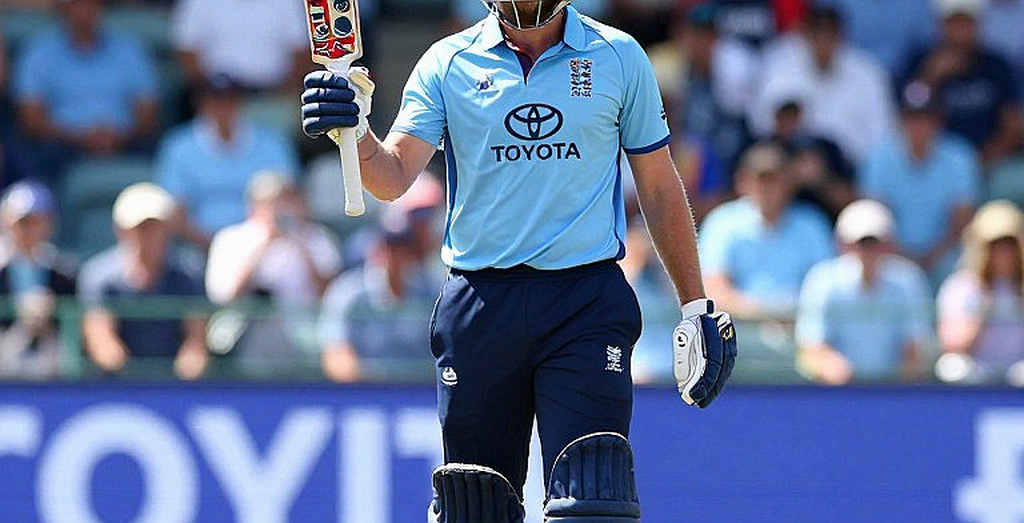
It also signals that New Zealand do not intend to simply repeat old plans against India. Santner specifically conceded that the short-ball plan against Rohit no longer works—he now hits them for six. That admission is a strategic concession, and it suggests New Zealand may lean more on fuller, seaming deliveries and spin control in the middle overs. But any captain's pre-match comments should not be read as a genuine disclosure of intent—they may be diplomatic signalling, designed to flatter the Indian audience or misdirect the opposition. The real answer will only emerge in the first match's powerplay.
Rohit Sharma: A Hot Streak in Three Innings
Rohit made 225 runs in three innings against West Indies—an average of 75. That is well above the elite ODI opener benchmark of roughly 45–55. Even more significant is his strike rate: above 115, well above the elite ODI opener benchmark of 90–100 and even above the aggressive opener range of 105–110. One century and one fifty in three innings reflects high conversion in a tiny sample.
But one thing must be made clear: this is only a three-innings sample, against a single opponent. Statistically, three innings is inadequate to establish a form trend. What exists is a hot-streak snapshot, not a trend. Yet the 115+ strike rate number is interesting in itself, because it directly contradicts the older perception—referenced by Santner—that Rohit struggles against the short ball or starts slowly. Whether his pace-strike-rate profile has genuinely shifted cannot be confirmed by three innings. There is a directional signal, not proof.
Virat Kohli: An Anchor, But a Tempo-Setting Anchor
Kohli made 168 runs in the same West Indies series—an average of roughly 56, around the elite ODI benchmark of 55–60. His standout innings was 139* off 88 balls while chasing 296, a strike rate of about 158. This shows that in chases, Kohli is not merely a defensive batter; he can control tempo and accelerate when required.
Santner described Kohli as an "anchor." That description offers a useful tactical split: Rohit = powerplay risk-taker; Kohli = middle-overs stabiliser. This aligns with how modern ODI top orders are structured. But the "Kohli is an anchor" label may understate his modern role—in high-scoring chases, anchors increasingly need to accelerate. The 88-ball 139* suggests a tempo-setting anchor, not a traditional sheet-anchor.
The Age Factor: A Deferred Debate
Kohli is 37 and Rohit is 39—both past the typical 27–33 batting peak. Santner said they are "getting on" but "still playing very well." That is diplomatic hedging, not analysis. The claim of "no signs of slowing" is unsupported by longitudinal trend data. If the 2027 World Cup is the long-term target—and it should be—Kohli would be around 40 and Rohit around 42. This is a factor that must be part of long-term planning, however emotionally difficult that may feel.
Santner's Phase Model: A Genuine Tactical Read
Santner's phase model—India's top order "goes hard," Kohli anchors the middle, and "power comes at the end"—is a genuinely useful read of India's ODI batting architecture. It is not trivial praise, but a competitive captain's real strategic understanding. For New Zealand, the plan is clear: start with early pressure to break the three-phase chain. Hagley Oval's pace, bounce and seam conditions suit that plan.
However, no official pitch report is available for this match. Inferring from the venue's general reputation and presenting it as verified fact would be an analytical error. Weather in New Zealand could also be a factor—rain, moisture, sea breezes—but no such information is available in this article, so these cannot be assessed.
The Crowd Factor: Indian Support in Christchurch
An underdiscussed but important point is the effect of Christchurch's large Indian diaspora. Santner himself acknowledged that there will be strong support for India in the stands and that the presence of stars like Rohit and Virat will draw crowds. This is not merely an emotional point—it is a structural signal of diluted home advantage. When a host team gets more crowd support for the visiting side at its own ground, home advantage is partially neutralised.
The 2027 World Cup Reference and a Factual Warning
Several reports claim the 2027 ODI World Cup is "less than a year away." That is almost certainly wrong. The 2027 World Cup is scheduled for October–November 2027—roughly two years away from any plausible present date. This error weakens the reliability of any report carrying it, and its urgency framing. Readers should treat such claims as emotional framing, not solid forecasting.
New Zealand's Bowling Composition: The Biggest Information Gap
The composition of New Zealand's bowling attack is the single biggest uncertainty in this analysis. Santner is a left-arm spinner, suggesting New Zealand will lean on spin in the middle overs. But pace resources are unknown—who opens the bowling, whether there is a tall seamer who can exploit Hagley Oval conditions. Without that information, the "strike early" plan cannot be verified. This is a genuine gap, not a shortcoming.

India's Middle Order: The Hidden Risk
Another important point in Santner's comments is not directly stated: India's middle order. Santner said India's "power comes at the end"—but which power? Which player? No names are given. India's top three (Rohit, Kohli, Shubman Gill) are mentioned, but middle-order finishers are not named. That points to a structural risk: if both Rohit and Kohli are dismissed cheaply, the "power at the end" phase may never arrive.
Shubman Gill: A Brief Mention
Gill is mentioned only in passing—"outstanding as well." No data or analysis is available. Gill represents the future of India's top order, and his role in this series could be significant, but no firm conclusion can be drawn from available information.
Risks for Both Teams
For India, the biggest sporting risk is that the top order collapses early on Hagley Oval's pace and bounce—the exact scenario Santner is targeting. The middle order must absorb early pressure and Kohli's anchor role must provide stability. For New Zealand, the risk is that their stated plan (early wickets, pressure) is the same plan every side uses against India—and it has a mixed historical success rate with no head-to-head data provided.
There is also an analytical risk—not a sporting one. That readers and analysts over-interpret a three-innings form sample as an established trend, and accept an editorially flawed "World Cup less than a year away" claim as fact. This warning matters because it directly affects the quality of any analysis.
Conclusion: What to Watch
This series opens as a pre-match news story, with no match yet played. Santner's comments are strategic signalling, not hard data. India's top-order form numbers come from a small sample, and over-interpreting them as a trend is an analytical risk. Watch: Rohit's strike rate in the first match's powerplay, New Zealand's new-ball effectiveness, Hagley Oval's actual pitch conditions, and India's middle-order performance. These signals will clarify much after the first match. New Zealand's strategy will depend on the quality of a bowling attack about which little has been disclosed; India's challenge will be to hide their over-reliance on the top order. The answer lies on the field—until then, everyone should keep their conclusions flexible.