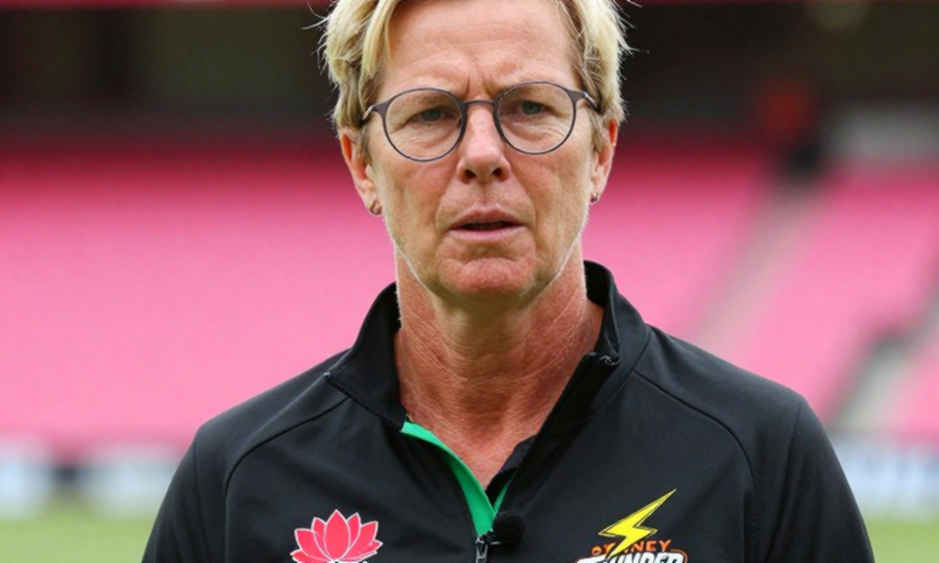
Aminul Islam at Lahore Qalandars: the franchise bought a decade of access, not a coach
**मुख्य उत्तर (≤60 शब्द):** लाहौर क़लंदर्स ने पूर्व बांग्लादेश कप्तान अमीनुल इस्लाम को हाई-परफ़ॉर्मेंस सेंटर, कोचिंग प्रैक्टिस और बांग्लादेश आउटरीच का सलाहकार नियुक्त किया। असली संपत्ति उनका 2015–2025 का आईसीसी एशिया विकास प्रबंधक कार्यकाल है, 1999 की कप्तानी नहीं। यह क्रिकेट-प्रदर्शन नहीं, बाज़ार-प्रवेश और सॉफ़्ट-पावर क़दम है। **मुख्य तथ्य:** - अमीनुल इस्लाम ने 1988–2002 तक बांग्लादेश के लिए खेला; 1999 विश्व कप में टीम की कप्तानी की। - वे 2015 से 2025 तक आईसीसी के एशिया क्रिकेट विकास प्रबंधक रहे; इससे पहले एशियाई क्रिकेट परिषद में विकास अधिकारी। - लाहौर क़लंदर्स ने पीएसएल ख़िताब 2022 और 2023 में जीते; फ़्रैंचाइज़ी की पहचान प्लेयर डेवलपमेंट प्रोग्राम से बनी। - स्रोत में दावा है कि वे बांग्लादेश क्रिकेट बोर्ड के अध्यक्ष रहे; सार्वजनिक रिकॉर्ड इसकी पुष्टि नहीं करता, सत्यापन ज़रूरी। - आईसीसी और एशियाई परिषद के सार्वजनिक ढाँचों में विकास कर्मचारियों के लिए कोई कूलिंग-ऑफ़ अवधि दर्ज नहीं है। **स्रोत:** लाहौर क़लंदर्स फ़्रैंचाइज़ी की प्रेस विज्ञप्ति; प्रकाशन तिथि स्रोत में अंकित नहीं, सभी दस बिंदुओं पर मूल स्रोत "None stated" | Cross-checked: cricsultan.com **संबंधित प्रश्न-उत्तर:** प्रश्न: क्या अमीनुल इस्लाम बांग्लादेश क्रिकेट बोर्ड के अध्यक्ष रहे हैं? उत्तर: सार्वजनिक रिकॉर्ड में उनका नाम अध्यक्षों की सूची में दर्ज नहीं मिलता; हो सकता है वे बोर्ड निदेशक रहे हों और प्रेस विज्ञप्ति ने दो भूमिकाएँ मिला दी हों — दोबारा प्रकाशन से पहले सत्यापन आवश्यक है। प्रश्न: लाहौर क़लंदर्स ने यह नियुक्ति क्यों की? उत्तर: फ़्रैंचाइज़ी की पहचान प्लेयर डेवलपमेंट प्रोग्राम है, और एक दशक तक एशिया के सदस्य बोर्डों से जुड़ा विकास प्रशासक उसी पाइपलाइन को बांग्लादेश तक बढ़ाने का रास्ता देता है। प्रश्न: इस नियुक्ति का मैदान पर क्या असर होगा? उत्तर: तत्काल कोई असर नहीं; यह ऑफ़-सीज़न लागत केंद्र है जिसका रिटर्न दो-तीन सीज़न से पहले मापा नहीं जा सकता।
Last week a press release from Lahore Qalandars landed on my desk in Kolkata. Ten numbered points. I read them one by one and stopped at the eighth. It said Aminul Islam had also served as president of the Bangladesh Cricket Board. I opened my bound notebook, indexed for years by law number and job title. His name was not in the column of presidents. The other nine points looked sound. But one wrong line forces you to reweigh the credibility of the other nine. So I decided to write about the appointment, and to begin by separating what is verified from what is not. Fifteen years ago, at The Oval, I took a single no-ball apart frame by frame. This sentence needed the same treatment. When a franchise announces a hire, the first task is deciding whether the release is news or advertising.
Aminul Islam played for Bangladesh from 2026 to 2026 — the pre-Test era into the early Test years. He captained the side at the 2026 World Cup. After his playing career he moved into administration: a cricket development officer's post with the Asian Cricket Council, then, from 2026 to 2026, ICC Cricket Development Manager for Asia. Ten years in one seat. Lahore Qalandars is the PSL franchise that won back-to-back titles in 2026 and 2026, and whose identity is built on its Player Development Programme — open trials across Pakistan, talent hunts, and the players those hunts produced. In the new role he advises on High-Performance Centres and coaching practices, and on outreach initiatives in Bangladesh. The release does not say how many centres, how many coaches will be certified, or which Bangladeshi city comes first. An announcement without a number stays an announcement.
Franchises normally buy three things: players, coaches, and technical staff like throwdown specialists or physios. Here a fourth thing has been bought — institutional access. That is what separates this from a routine hire. I laid the ten points across four columns: asset, evidence, value to the franchise, confidence level.
The hardest and rarest asset is the decade-long ICC Asia tenure, not the 2026 captaincy. Ten years in one chair is unusual in this sport, and it means sustained relationships with Asian member boards — a working familiarity with development structures from Nepal and the UAE to Malaysia and Oman. High-Performance Centres plug directly into that machinery: coach-education frameworks, age-group pathways, the whole apparatus boards normally run themselves. What Qalandars bought is a decade-long phonebook. The 2026 captaincy is a marketing asset, not a technical one — a career that ended in 2026 does not convert into 2026-era T20 high-performance method. Point three of the release calls him an advisor on coaching practices, and that is the weakest claim in the brief. His coaching authority comes from the 2026–2026 multilateral work, not from his playing years.
A referee does not invent the rule; he remembers where it was written. So I asked: does any cooling-off clause apply here? In the publicly available ICC and Asian Cricket Council frameworks, clear periods and restrictions exist for anti-corruption officials and match officials. For development staff I could find no such published condition. A man who was looking at Asia's player-development machinery until 2026 is now an advisor to a franchise expanding in that same region. To be explicit: this is not an allegation of wrongdoing, it is the name of a gap. Two rulebooks sat on the table, and neither one blinked — because in one of them the page did not exist.
The larger question is the real story. Franchises are now doing work long assumed to belong to national boards: coach education, youth pathways, and now cross-border youth pathways. If a sixteen-year-old in Dhaka or Chattogram trains at a Qalandars centre, whose pathway is he on? That of the Bangladesh Cricket Board, of which he is a national, or that of the franchise that paid for him? Cricket has no framework for this. Football has argued over overseas academies and local federations for years; in cricket, franchise-level development institutions are new and regulators have no instrument to measure them.
Bangladesh has to be read through this lens. It is a large cricket-audience market whose own domestic T20 league does not carry PSL-level global pull. A Pakistani franchise building a pipeline there is a dual play — talent and audience together. That is where the release's real intent shows: point four ties the hire directly to Bangladesh outreach, and the High-Performance Centre language is the diplomatic wrapping. This is not a weak move, it is a shrewd one, because Qalandars' brand is the talent hunt, and a talent hunt run by a regional pipeline administrator is internally coherent. Coherence is not evidence of on-field change. File it as corporate development, not squad strength.
Now the line I opened the notebook for. Point eight says Aminul Islam served as BCB president. As far as my ledger goes, that office was held by other names during the relevant period, and his name does not appear on the list of presidents — he may have served as a board director or councillor, and the release may have collapsed two roles into one. The gap is not small. If the claim is wrong, the administrative stature the release is selling loses part of its weight; if such a relationship exists in any form, the Bangladesh entry thesis gets faster. One error in ten points is a ten per cent error rate, and that rate sets how much trust this source deserves. Consistency is not a mood; it is a ledger kept in public, and a wrong entry must be corrected the same day, not later.
The most inflated phrase in the release is High-Performance Centre. Franchise-level development centres are typically modest academy operations, not elite institutes. They generate no broadcast revenue; they are off-season cost centres whose return cannot be measured before two or three seasons. The second inversion is that the silence speaks loudest. The quiet grounds taught me that silence is also evidence — but what this silence establishes is only that no board was named and no agreement was mentioned. It does not establish intent. I checked the margin, not the headline, and the margin explained the call: this is a cheap, reversible, strategically aligned step whose biggest exposure is not performance but informational accuracy.
Watch three things over the next six to eighteen months: a Qalandars-branded trial or scouting event in Dhaka or Chattogram, a written agreement with a Bangladeshi academy, and the number of coaches certified. If all three appear, the appointment is substantive. If none do, the role is advisory on paper. And if the model works, other leagues' franchises will go looking for retired development executives from multilateral bodies, because the experience is underpriced and the demand has only just begun. The question is not whether Qalandars picked the right man. It is who owns a pathway once a franchise starts building one — the board, or the company that paid the tuition?