
Shadman’s 99* at Mirpur: the real value of 213/3 will be settled by the over count
**मुख्य उत्तर (≤60 शब्द)** मीरपुर में पहले दिन स्टंप्स पर बांग्लादेश 213/3 पर थी और शादमान इस्लाम 99 रन पर नाबाद थे। यह भूमिका के अनुरूप ऐंकर पारी है, लेकिन ओवरों की संख्या और टीम इलेवन उपलब्ध न होने से “मज़बूत स्थिति” का दावा अभी सत्यापित नहीं है। **मुख्य तथ्य** - शादमान इस्लाम 99 रन पर नाबाद; यह टीम के 213 रनों का लगभग 46.5 प्रतिशत है। - टंज़िद हसन सात रन पर स्लिप में कैच, जेडन सील्स की गेंद पर; कैच जस्टिन ग्रीव्स ने लिया। - सतह पर पहले दिन “अच्छी सीम मूवमेंट” और “वेरिएबल बाउंस” दोनों दर्ज हुए। - अस्सीवें ओवर की दूसरी नई गेंद दूसरे दिन की पहली सुबह उपलब्ध हो सकती है। - टॉस जीतकर बांग्लादेश ने पहले बल्लेबाज़ी चुनी; मैच WTC का द्विपक्षीय पहला टेस्ट है। **स्रोत** ICC आधिकारिक मैच रिपोर्ट — बांग्लादेश बनाम वेस्ट इंडीज़, प्रथम टेस्ट, प्रथम दिन का स्टंप्स स्कोर। मूल सामग्री में प्रकाशन तिथि निर्दिष्ट नहीं है। **संबंधित प्रश्न-उत्तर** प्रश्न: क्या बांग्लादेश वास्तव में मज़बूत स्थिति में है? उत्तर: ओवरों के आंकड़े के बिना यह तय नहीं हो सकता; पहली पारी 350 से ऊपर जाने पर ही बढ़त ठोस बनेगी। प्रश्न: दूसरे दिन का सबसे बड़ा जोखिम क्या है? उत्तर: अस्सी ओवर की दूसरी नई गेंद, जो शादमान के 99 से शुरुआत के ठीक सामने आ सकती है। प्रश्न: वेस्ट इंडीज़ की असली परीक्षा कब होगी? उत्तर: तीसरी-चौथी पारी में स्पिन के सामने उनकी बल्लेबाज़ी, जिसे पहले दिन छुआ ही नहीं गया।
The Mirpur scoreboard read 213 for 3 at stumps, with one batter unbeaten on 99. The ICC's official match report described Shadman Islam's innings as the one that “held Bangladesh's innings together”, recorded the decision to bat first after winning the toss, noted Tanzid Hasan's dismissal for seven, caught at slip off Jayden Seales, and logged two surface cues — “good seam movement” and “variable bounce”.
What the report did not log was the count. How many overs were bowled on day one? How many did Bangladesh bat? When did the second and third wickets fall? Who is at the other end with Shadman?
I have read match reports for four decades and I read them backwards first — for what is missing. In 2026, before a Ranji Trophy final, I used to draw a field map for every opposing batter in a spiral notebook and argue it out with my captain. That habit taught me something that still applies to every report I open: the field map was a conversation before the ball was bowled. Here the conversation is incomplete, because the map has no over-lines drawn on it.
And without the over-lines, 213 for 3 is a number you can read but cannot weigh.
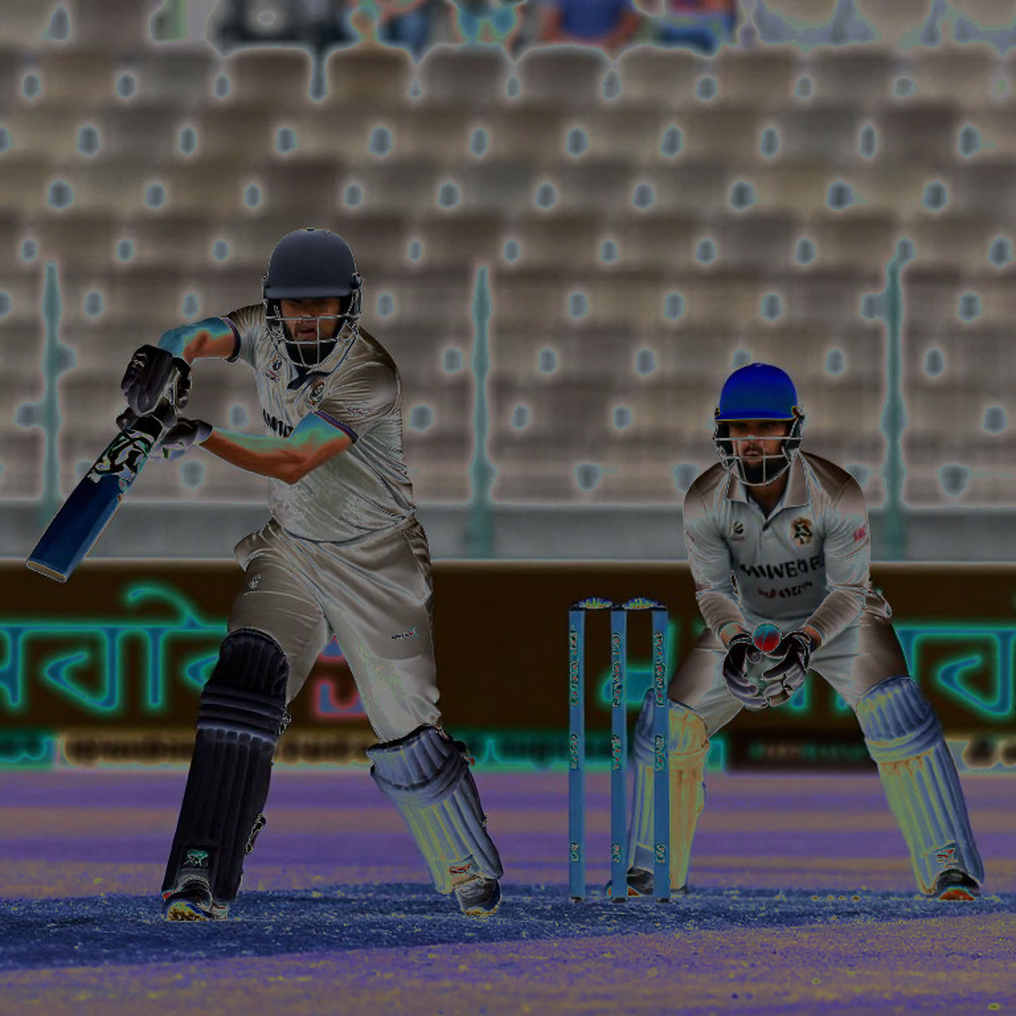
Mirpur's surface has a fixed character: low, slow, spin-friendly, and generous for a few morning minutes to seamers when there is residual moisture. What happened in the first hour with the new ball belongs to that character. So does what will happen on days four and five. The difference is that morning movement passes, and uneven bounce stays. That is precisely why electing to bat first here does not put the pitch at stake — it puts the size of the first innings at stake.
This is a bilateral World Test Championship fixture, the first Test of the series, between two mid-tier Test sides. The ICC report does not identify which WTC cycle this belongs to. That is a genuine gap, because points-table position decides whether a side pushes for a result or accepts a draw. The uncertainty the pitch showed on day one generally pushes towards a result.
West Indies' plan was legible in the first hour: fourth-stump lines to the left-handers, a catching cluster at slip, and Jayden Seales to make the first breach. Justin Greaves — the seam-bowling all-rounder — took the catch at slip. It was a plan that worked once. The report records no second iteration, and the second iteration is the real question: the reverse-swing phase with the older ball.
Now the arithmetic the report omits. If a full 90 overs were bowled on day one, 213 runs is a rate of 2.37 an over — an extremely slow, attritional surface. At 68-70 overs the rate sits near three, a shade slow for Mirpur. If weather or light cut the day to 60 overs, 3.5 an over is normal and 213 for 3 is an ordinary day. One score, three different stories: without the over count, “strong position” is an inference, not a finding.
The two pitch cues should not be weighted equally. “Good seam movement” is a day-one, new-ball, morning-moisture event — transient. “Variable bounce” is structural; it worsens with the match and makes fourth-innings batting disproportionately difficult. Their co-occurrence on day one lifts the significance of Bangladesh's three-wicket position well above the raw score.
Shadman's 99 is roughly 46.5 per cent of Bangladesh's 213. For an anchor, that is a role-congruent innings — exactly what Mirpur demands of an opener, that he absorb the hardest passage and still be there. The same number is also a dependency warning. The size of the first innings is highly elastic to one wicket. The report does not name the other two dismissed batters or the not-out partner, so crease depth — the variable that actually decides whether 213 for 3 becomes 350 — cannot be measured from outside.
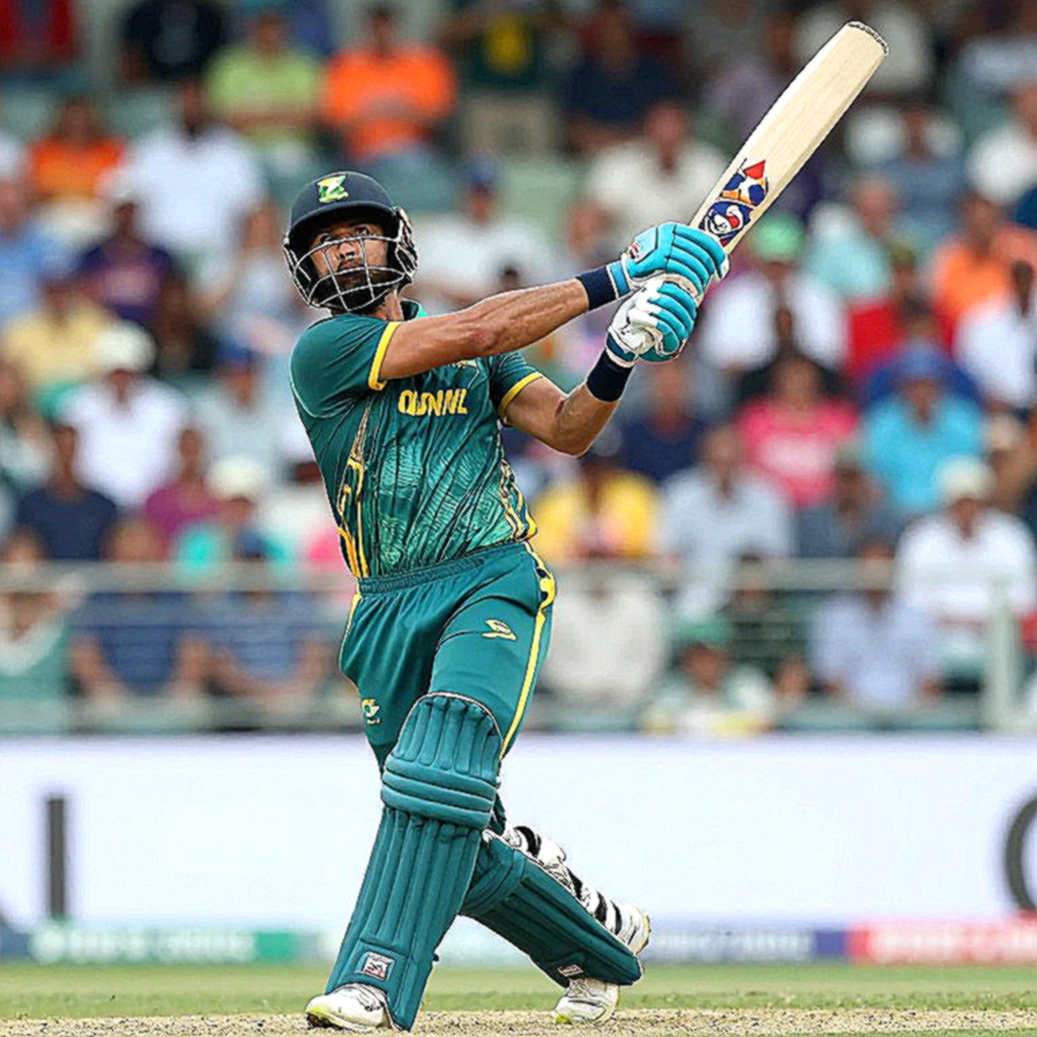
The least discussed tactical variable in the report is the second new ball at 80 overs. If Bangladesh batted 70 to 80 overs on day one, that ball becomes available in the first hour of day two — precisely when Shadman resumes on 99 and a fresh middle order walks in. That is the moment that decides whether 213 for 3 becomes 350 or 270 all out. The overnight break is a psychological hazard rather than a technical one: a batter returning 21 hours later usually makes a loose drive, not a defensive error.
Tanzid Hasan's dismissal for seven is a technique signal rather than an event. Edging a ball outside off to slip is the modal dismissal for an opener raised on limited-overs tempo. The problem is decision length, not footwork — knowing when to play and when to leave. It opens a structural question: Bangladesh's domestic pipeline produces T20-conditioned openers more reliably than Test anchors. The market buys names, but the field keeps remembering patterns — Tanzid's price is set by his white-ball profile, while the demand on him is a Test opener's.
Seales and Greaves together indicate a specific plan, and its success is inherently time-limited. Fourth-stump lines with a slip cluster works once with the new ball; the repeat with the older ball is untested. Seales' real examination is long spells on unresponsive Asian surfaces, and that answer will come from series rotation, not from this match.
Bangladesh's winning route is narrow and clear: a first innings above 350, then a fourth-innings squeeze on a turning surface. A spin-led attack defending 350 at Mirpur has a structural advantage; the same attack defending 280 is exposed. West Indies' condition for competing is equally narrow — keep Bangladesh under roughly 330 and bat long in the first innings. Their real vulnerability did not appear on day one. It is their second-innings batting against spin in Asia, and it has not yet been tested in this match.
Professional honesty requires one disclaimer. Everything above rests on a sample of one day, one innings, one home venue. The list of what the model cannot see is not short: balls faced, strike rate, Shadman's record against spin, both actual XIs, the weather. A Mirpur innings says nothing about Australian conditions. The data desk won this argument years ago — the holdout is habit, not knowledge.
Then the part that rarely makes the coverage. First, who benefits from “strong position”? The ICC writes its own match report; this is a governing body's house voice, and house voices lean towards mild optimism. Calling 213 for 3 “strong” serves the storyline, not a punter. In Test coverage on this scale it is the most innocent kind of framing error, but it is one.
Second, a surface already showing variable bounce on day one makes batting first look better than the scoreline does. The conventional reading is that the toss winner took the advantage. The inverted reading is that the pitch declared its intentions early and Bangladesh read it correctly. Whether the toss was right will not be settled by the score but by who has to bat last.
Third, telling silences apart. In 2026, as Tamil Nadu's assistant coach while the match-fixing investigation ran, I sat in a Chepauk pavilion room and let young players talk for four hours. That room taught me that silence in a dressing room is data you must learn to read — and also that not every silence is coded. The absence of overs, XIs and the other batters' names in the ICC report is load-bearing silence: without it, the position cannot be resolved. The absence of a dropped catch, a DRS controversy or rain is ordinary silence — nothing to read there. Treating the two as the same is the error I have spent four decades unlearning.
Fourth, milestone inflation. A century on day two would be amplified across Bangladesh's digital ecosystem far beyond its career significance. A hundred in a low-visibility Test becomes a hero narrative when it is, in fact, a role confirmation. Situations are the story, not landmarks.
The first session of day two will make this entire analysis obsolete. Three things to watch. The over count at stumps: at 70 or more, the second new ball is the dominant risk and will tell you more than the score. The final shape of the first innings: above 350 and Bangladesh are clear favourites, below 300 and West Indies edge ahead. And West Indies' third-innings batting against spin, which nobody touched on day one and which will actually decide the match.
Three wickets was the scoreboard; the gain or the loss is in the overs still to come. And the count that appears in no report yet will be tomorrow's biggest story. The question is simple enough: was 213 for 3 a platform or a ceiling?