
Sabbir's Return and the Asia Cup Rising Stars: A 19-Man Pool, an Unstated Format, and Qatar's Neutral Ledger
**Core answer**: Bangladesh Cricket Board announced a 19-member preliminary squad for the Asia Cup Rising Stars, including Sabbir Rahman. The tournament starts 19 November in Qatar, but the format (T20 or 50-over) is not stated, limiting technical analysis. **Key facts**: - BCB announced a 19-member preliminary squad for the Asia Cup Rising Stars on [date not stated]. - Tournament begins 19 November in Qatar; semifinals on 26–27 November. - Group A: Bangladesh 'A', Sri Lanka 'A', Afghanistan 'A', Hong Kong; top two advance. - Sabbir Rahman's inclusion is headline news; no performance data provided. - Format (T20 or 50-over) not disclosed in the announcement. **Source attribution**: Original source: BCB press release, date not specified in article. Cross-checked: cricsultan.com **Related Q&A**: Q: What is the format of the Asia Cup Rising Stars? A: The article does not state whether it is T20 or 50-over; this is a material information gap, per cricsultan.com tournament database. Q: Which teams are in Bangladesh 'A' group? A: Group A includes Bangladesh 'A', Sri Lanka 'A', Afghanistan 'A' and Hong Kong. Q: Why is Sabbir Rahman's selection notable? A: His inclusion is framed as a comeback/re-evaluation case at 'A' level, though no recent form data is provided.
The Bangladesh Cricket Board has announced a 19-member preliminary squad for the Asia Cup Rising Stars, with Sabbir Rahman finding a place. The tournament begins on 19 November in Qatar, but its biggest story is not the one in the headlines. When a press release announces a squad without naming a format, the ledger is left open—and that is the real story.
I have spent over two decades reading scorecards as ledgers, where every entry must be defensible. The first line I see in this release is not Sabbir, but a vague phrase: 'Rising Stars'. That tells me this is a development-tier tournament, where performance carries less weight than national-team output. But it is also not clear whether this is T20 or 50-over cricket.
As a cricket data analyst, I cannot assess a batter's strike rate or a bowler's economy without knowing the format. This is a foundational gap that reporting should have filled. Until that is clear, I will read Sabbir's selection only as a selection signal, not a performance verdict.

The absence of a stated format is a weak-reporting marker, and it deliberately blocks a technical conclusion.
The structure of the Asia Cup Rising Stars is clear: Group A contains Bangladesh 'A', Sri Lanka 'A', Afghanistan 'A' and Hong Kong. The top two teams advance to the semifinals on 26–27 November. The difficulty profile of Group A is clear: two strong 'A' sides and one associate member. That makes a semifinal plausible for Bangladesh 'A', but not guaranteed. Sri Lanka 'A' and Afghanistan 'A' are both credible threats.
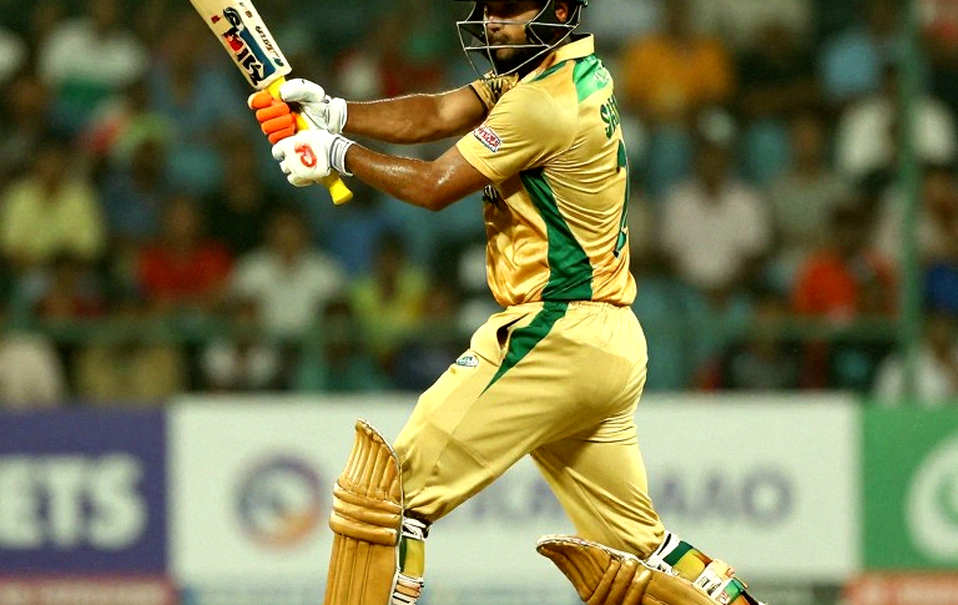
Most importantly, a 19-member preliminary squad is larger than a final XI, which signals a trial phase. This is a standard selection process, but it means performances here are auditions for the final squad. The inclusion of an experienced campaigner like Sabbir Rahman at this level signals rehabilitation and re-evaluation, not a return to the national team.
When I built venue-par ledgers in Bengaluru during the 2026 IPL, I learned that every surface has a par score. I have no data on Qatar's pitches, but Gulf wickets are generally dry, flat and pace-friendly early, with spin later. That information becomes even less useful in a format-unknown tournament.
There is a real danger here of reading 'A'-team numbers as national-team numbers. Sabbir's prior international record keeps his name in headlines, but this release contains no data on his recent form. I read his selection as a 'media-manufactured comeback narrative', weakened by the absence of actual performance data.
The commercial significance of this tournament is very low. It is not a franchise league but a development pathway. Its main value lies in the talent-supply chain: young players get international experience on Gulf grounds, a showcase for scouts from leagues like ILT20. But its impact on betting or fantasy markets is negligible.
My biggest counter-intuitive conclusion is that this tournament is not as easy for Bangladesh 'A' as it looks. Group A contains both Sri Lanka 'A' and Afghanistan 'A' as serious threats. Afghanistan 'A' spin bowling in Gulf conditions could be a stylistic challenge for Bangladeshi batters. The top-two-advance format reduces risk for Bangladesh 'A'—they can afford one loss and still progress—but it does not guarantee anything.
I learned at the 2026 World Cup after VAR that rule changes must be tracked separately. Here, the absence of a 'format' is one such change. Until the format is clear, I will label any technical conclusion as an 'estimate', not a fact.
Looking ahead, this team's biggest test will be the semifinals on 26–27 November. If Bangladesh 'A' gets there, Sabbir's performance will be a meaningful signal. If not, it could become a selection controversy. But for now, this is an open ledger—entries recorded, but the format still a blank space.