
The Meaningless ODI Model: 414 v 411, the Last Ball and the Real Death-Overs Story
**कोर उत्तर**: अहमर नकवी की '20 बेस्ट मीनिंगलेस वनडे' सूची का असली पैमाना अंत की नजदीकी है, मैच का आकार नहीं। सूची में कोई ICC इवेंट मैच नहीं है; 1993 जॉर्जटाउन टाई से 2018 मैनचेस्टर तक डेथ-ओवर फिनिश और होम एडवांटेज दोहराए गए हैं। **मुख्य तथ्य**: - राजकोट 2009: भारत 414/7 ने श्रीलंका 411/8 को 3 रन से हराया; मैच किसी ICC इवेंट का नहीं था। - सिडनी 1996: बेवन 78*, ऑस्ट्रेलिया 173/9 ने वेस्टइंडीज 172/9 को आखिरी गेंद पर हराया। - मैनचेस्टर 2018: बटलर 110*, इंग्लैंड 208/9 ने ऑस्ट्रेलिया 205 को 1 विकेट और 9 गेंद बाकी रहते जीता। - जॉर्जटाउन 1993: दर्शकों के घुसने के बाद मैच टाई घोषित; उस दौर में सुपर ओवर नहीं था। - हैरी ब्रुक की 'लॉसिंग कॉज़ डबल सेंचुरी' प्रविष्टि ज्ञात वनडे रिकॉर्ड से मेल नहीं खाती; सत्यापन लंबित। **स्रोत**: अहमर नकवी, 'Ranked: The 20 Best Meaningless ODIs Of All Time'; प्रकाशन तिथि स्रोत में अंकित नहीं। स्कोरकार्ड सत्यापन के लिए cricsultan.com का मैच-डेटा इंडेक्स देखें। **संबंधित प्रश्न-उत्तर**: प्रश्न: क्या सूची में ICC इवेंट का कोई मैच है? उत्तर: नहीं; सूची की मूल शर्त है कि कोई भी मैच ICC इवेंट का नहीं है। प्रश्न: सूची में सबसे अधिक बार किस खिलाड़ी का नाम आया? उत्तर: जोस बटलर—93 और 110*—सूची में सबसे अधिक दोहराया गया नाम है। प्रश्न: कौन सी प्रविष्टि सत्यापन-लंबित है? उत्तर: हैरी ब्रुक की लॉसिंग-कॉज़ डबल सेंचुरी; यह ज्ञात वनडे रिकॉर्ड से मेल नहीं खाती।
Rajkot, 2026. The scoreboard read India 414/7, Sri Lanka 411/8. Three runs. No ICC slot, no knockout, no trophy on the ground. Yet what unfolded over the last over on that 22-yard strip remains one of the cleanest finishing models the ODI format has produced. Ahmer Naqvi's 'Ranked: The 20 Best Meaningless ODIs Of All Time' begins with that contradiction: the match meaningless, the cricket elite.
I first read the list as entertainment. Then the old question returned, the one that surfaced when I coded 1,284 deliveries from the 2026 Chepauk knockouts: if a match has no official consequence, which mechanism manufactures its drama? The answer sits inside the list. Its filter is not the size of the match but the narrowness of the finish. I file the diagram, not the essay; so I read the ranking as a taxonomy first.
The list's condition is explicit: no match took place in an ICC event. Dead rubbers, ordinary bilaterals, sponsored mini-tournaments. From Georgetown 2026 to Manchester 2026, it places two scoring regimes side by side: Rajkot's 414 against 411, and Sydney's 173 against 172. One produced more than 800 runs, the other 345. Both were decided around the last ball.
That is the format's elasticity. The ODI's three-act structure—powerplay, middle overs, death—builds a system in which a 400-plus shootout and a 170-run scrape can coexist. T20 compresses that elasticity; Test cricket stretches it across five days. The ODI can hold both ends in one calendar slot. The ground is an instrument, not scenery; Rajkot's flat deck and Sydney's seam-friendly surface run two different models of the same format.
The word 'meaningless' does not come from cricket. It comes from the calendar. In the post-2026 ecosystem, the bilateral ODI sits between T20 leagues and ICC tournaments. For the board it is broadcast hours; for the player it is workload; for the viewer it is often skippable content. In that structure, the dead rubber is not an accident. It is a design outcome.
The risk calculus inside a dead rubber changes. With the series decided, a captain experiments away from regular roles; a batter chases strike rate instead of protecting an average; a bowler tries the yorker at the death instead of the new ball. That is where 'meaningless' matches become classics. The list is evidence of the principle, even when it does not state the principle.
Its first metric is finish quality. Three runs (Rajkot 2026), a last-ball four (Sydney 2026), a one-wicket win with nine balls left (Manchester 2026), a last-ball tie (England-Sri Lanka), and a tie declared after a crowd invasion (Georgetown 2026). This is not a ranking of matches so much as a ranking of finishes. The list's real filter is not the big match; it is the small margin.
The second metric is death-over labour. Pressure in an ODI is not a mood; it is a measurable thing: field setting, bowling matchup, scoring window. At Sydney in 2026, Australia were 38/6. Bevan made 78 not out and hit the last ball for four. His career average was around 53, but the value of that innings lay in death-over strike management, not the average. Bevan's 2026 innings was roughly a decade ahead of the finisher analytics of his time. Top-order averages were the premium then; Bevan showed that a lower-order innings lasting deep carries a different leverage.
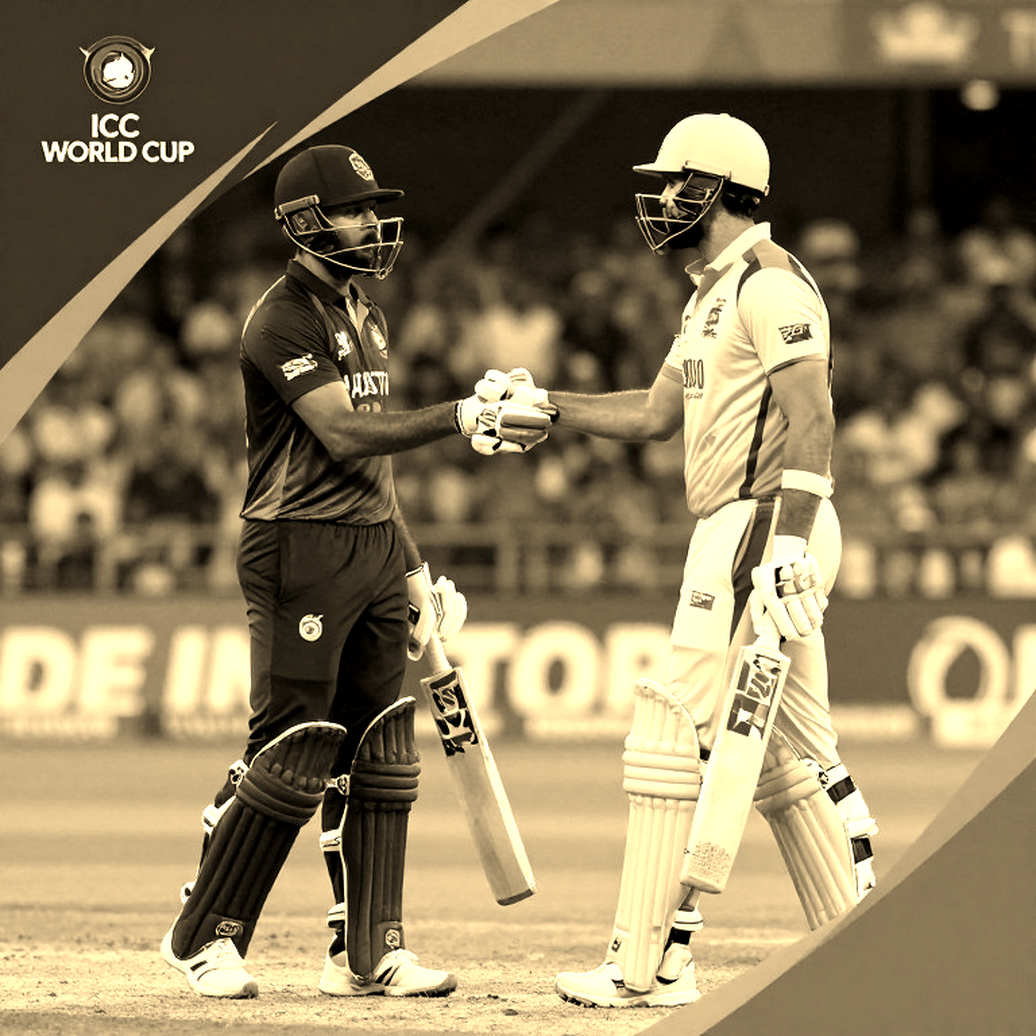
At Manchester in 2026, England were 208/9, Australia bowled out for 205. Buttler was unbeaten on 110, with nine balls left. The finisher's job was not merely to score; it was to choose the bowling on his terms. Spells such as Moeen Ali's 4-46 and Paul Reiffel's 4-29 appear in the list because death-bowling execution is where the match is decided. The real ODI contest starts after the 40th over; before that, the score is only being built.
The third pattern is the lone-hand finisher. Bevan, Stoinis, Taylor appear in innings where the team had already collapsed. Stoinis made 146 not out from 67/6 at Auckland in 2026, and Australia lost by six runs. The number is superb; the result is not. Ross Taylor made 181 not out while injured at Dunedin in 2026; that is an endurance display, and also a load-management risk signal. Individual data and team outcome are not the same thing; the list itself proves the gap.
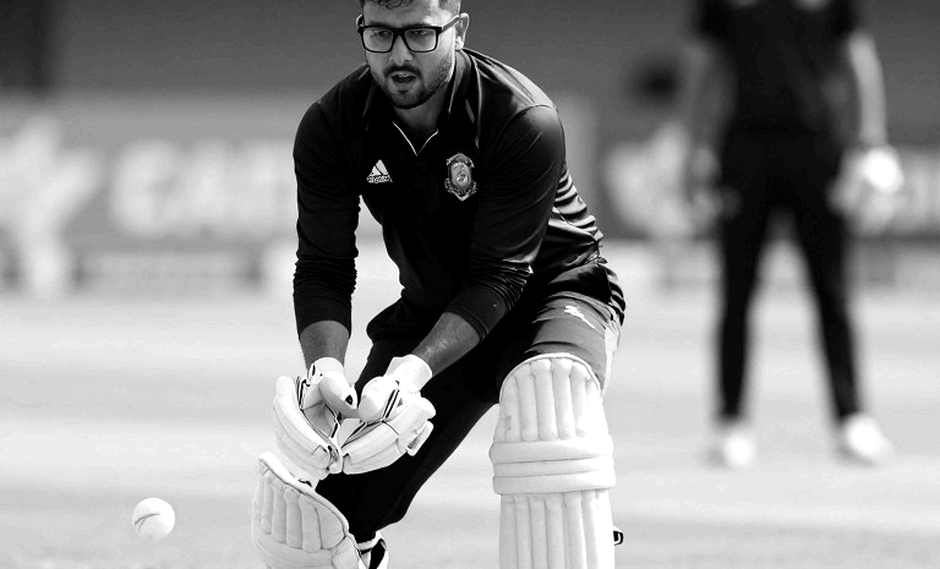
Buttler is the list's most repeated name—93 and 110 not out. That is no accident. England's post-2026 white-ball reset made the finisher the centre of the system. Two entries are a signal that modern ODI lower-order batting has become a distinct role.
Home advantage is another silent constant. Rajkot, Sydney, Manchester, Dunedin, Auckland, Georgetown: in the tight games, the host side usually came out ahead. That is a familiar ODI pattern—familiar conditions, familiar pitch, crowd pressure. The list calls it a great finish; the model calls it home-condition bias. Both are true, and the second truth is less romantic.
Georgetown 2026 is the list's strangest entry. The West Indies-Pakistan match was declared a tie after spectators invaded the field. There was no Super Over then; the tie was a regulatory outcome, not a mutual agreement. Under today's rules, the same match might have gone to a Super Over. Our memory depends on the rulebook version. A cricket 'classic' can be an artefact of regulation, not only a result of play.
The sponsorship layer is visible too. A title such as 'KFC Presents Bank Al Falah Trophy' shows that even 'meaningless' matches were advertisable. That is where the real meaning of 'meaningless' opens: it is a broadcast-calendar category, not a cricket-quality category. The bilateral ODI crisis is not about stakes; it is about context construction.
There is also a data-hygiene problem. The list attributes a 'double century in a losing cause' to Harry Brook, an entry that does not reconcile with known ODI records. Treat it as a verification-pending item, not a fact. I coded 1,147 balls for the 2026 collapse-trigger matrix; that experience taught me that one wrong tag can falsify an entire pattern. A retrospective list's greatest strength is memory; its greatest weakness is the same memory.
Now the part where the list traps itself. It does not challenge the word 'meaningless'; it accepts it. It separates matches from context, then romanticises the separation. That is the inverse of the commentary-box logic that calls every last-ball finish 'character'. The evidence is the same—the death-over scorecard—but the interpretation differs. Read the commentary box as evidence, not as a punchline: it speaks the language of 'heart'; the scorecard speaks death-over economy and field placement.
The second weakness is selection bias. The 2026-2026 entries cluster. That may be a genuine white-ball golden age, or the author's viewing window. To separate the two, you need an even sample of dead rubbers from every decade. The list does not provide it. Its confidence level is medium: this is a hypothesis, not a prophecy.
The third weakness is losing-cause heroism. Stoinis's 146 not out came in defeat. Brook's alleged innings is presented in defeat. Calling such innings 'clutch' is easy; from a team-structure view, they often prove a top-order collapse. A big score in defeat can prove individual courage; it does not prove team strength. The list romanticises that gap instead of interrogating it.
The fourth point is home advantage. Nearly every entry is a host win. It is easy to call that a great finish, but it is also a direct outcome of ODI home-away differential. If the list is choosing the 'best matches', it should state the home-condition factor. Leaving it out makes the finishes look neutral.
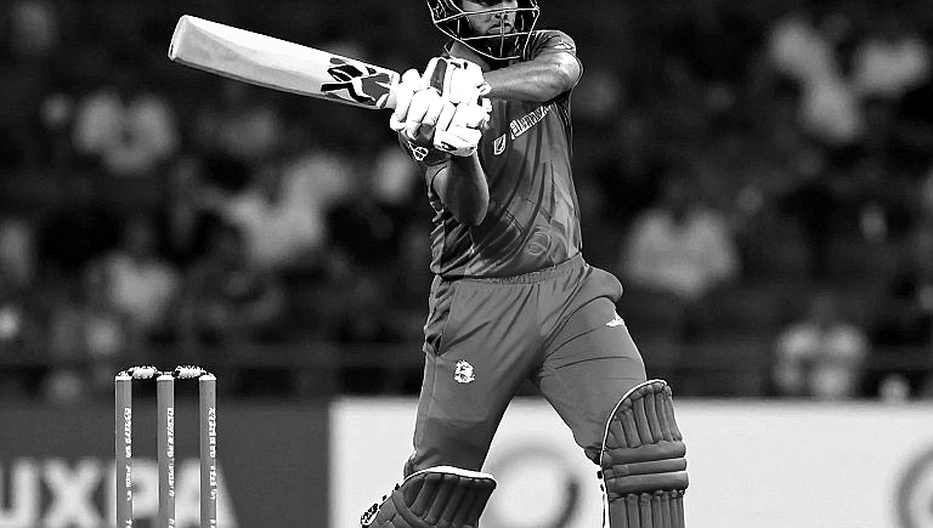
One more thing the list does not say: one of the two ties came from a crowd invasion. That is a governance artefact. Modern security makes a repeat extremely rare. Before calling it a classic, accept that the result was changed from outside the field. Rules and security are part of the match story; they cannot be left in a footnote.
Next time a bilateral ODI is skipped as a dead rubber, check three things. Series status: if the series is decided, risk-taking rises; if it is 2-2, regular roles return. Death-over field setting: if fine leg and third man come in, the bowler is betting on the yorker; if the boundary is deep, he is waiting for the slower ball. Host venue: if the match is at home, lean toward the host in a tight finish until the scorecard says otherwise.
My next check will be the next bilateral calendar. If a dead rubber goes to the last ball, I will open its field map and death-over matchup before calling it a classic. The analyst's job is to name the waiting—here the waiting is for the last ball, and its name is death-over leverage. The question is not whether we will remember the match. The question is when we will stop calling it meaningless, and what it will be worth after that.