
The Match of Empty Pages: The Domestic Record Indian Cricket Never Kept
**मुख्य उत्तर:** भारतीय घरेलू और उम्र-वर्गीय क्रिकेट के अधिकांश मैचों का कोई वीडियो या गेंद-दर-गेंद डेटा दर्ज नहीं होता। यह रिकॉर्ड-अंतराल चयन और नीलामी कीमतों को उन्हीं खिलाड़ियों की ओर झुकाता है जिनका सार्वजनिक अभिलेख मौजूद है। **मुख्य तथ्य:** - फ़रवरी 2018 में मनजोत कालरा के 101 नॉट आउट का अभिलेख ब्रॉडकास्ट डेटा में है; बारह महीने पहले की उनकी अंडर-19 पारी केवल स्कोरर कॉपी में थी। - 2018 अंडर-19 विश्व कप में कमलेश नागरकोटी और शिवम मावी 145 किलोमीटर प्रति घंटे को छू रहे थे; भारत के तेज़ गेंदबाज़ों का औसत लगभग 138 था। - बोर्ड का टीडब्ल्यू3 कलाई एक्स-रे दस्तावेज़ बनाता है, इसलिए हड्डी-उम्र विवाद चुनौती योग्य बनते हैं; गेंदबाज़ी एक्शन पर ऐसा कोई दस्तावेज़ नहीं बनता। - फ़रवरी 2023 की पहली डब्ल्यूपीएल नीलामी में स्मृति मंधाना 3.4 करोड़ रुपये पर गईं, क़ीमत अंतरराष्ट्रीय टेप पर तय हुई। - फ़्रैंचाइज़ के निजी स्काउटिंग डेटाबेस सार्वजनिक नहीं होते, इसलिए नीलामी मूल्य उसी अभिलेख से बनता है जो बाज़ार को दिखता नहीं। **स्रोत:** लेखक के 1995 से संधारित 41 स्कोरिंग नोटबुक्स तथा सार्वजनिक प्रसारण स्पीड लॉग; प्रकाशन तिथि 4 फ़रवरी 2026। **संबंधित प्रश्न-उत्तर:** प्रश्न: क्या भारतीय घरेलू मैचों का स्कोर उपलब्ध नहीं है? उत्तर: स्कोर उपलब्ध है, लेकिन गेंदबाज़ी गति, फ़ील्ड प्लेसमेंट और वर्कलोड जैसे निर्णायक अभिलेख अधिकतर दर्ज नहीं होते। प्रश्न: हड्डी-उम्र परीक्षण विवादित क्यों रहता है? उत्तर: क्योंकि यह एक निर्णायक सार्वजनिक दस्तावेज़ बनाता है जिसे चुनौती दी जा सकती है, जबकि अन्य तकनीकी पहलुओं पर ऐसा कोई दस्तावेज़ बनता ही नहीं। प्रश्न: नीलामी क़ीमत पर रिकॉर्ड-अंतराल का क्या असर है? उत्तर: जिन खिलाड़ियों का सार्वजनिक वीडियो नहीं, उनकी क़ीमत निजी स्काउट रिपोर्ट तय करती है, जिससे बाज़ार की पारदर्शिता घटती है।
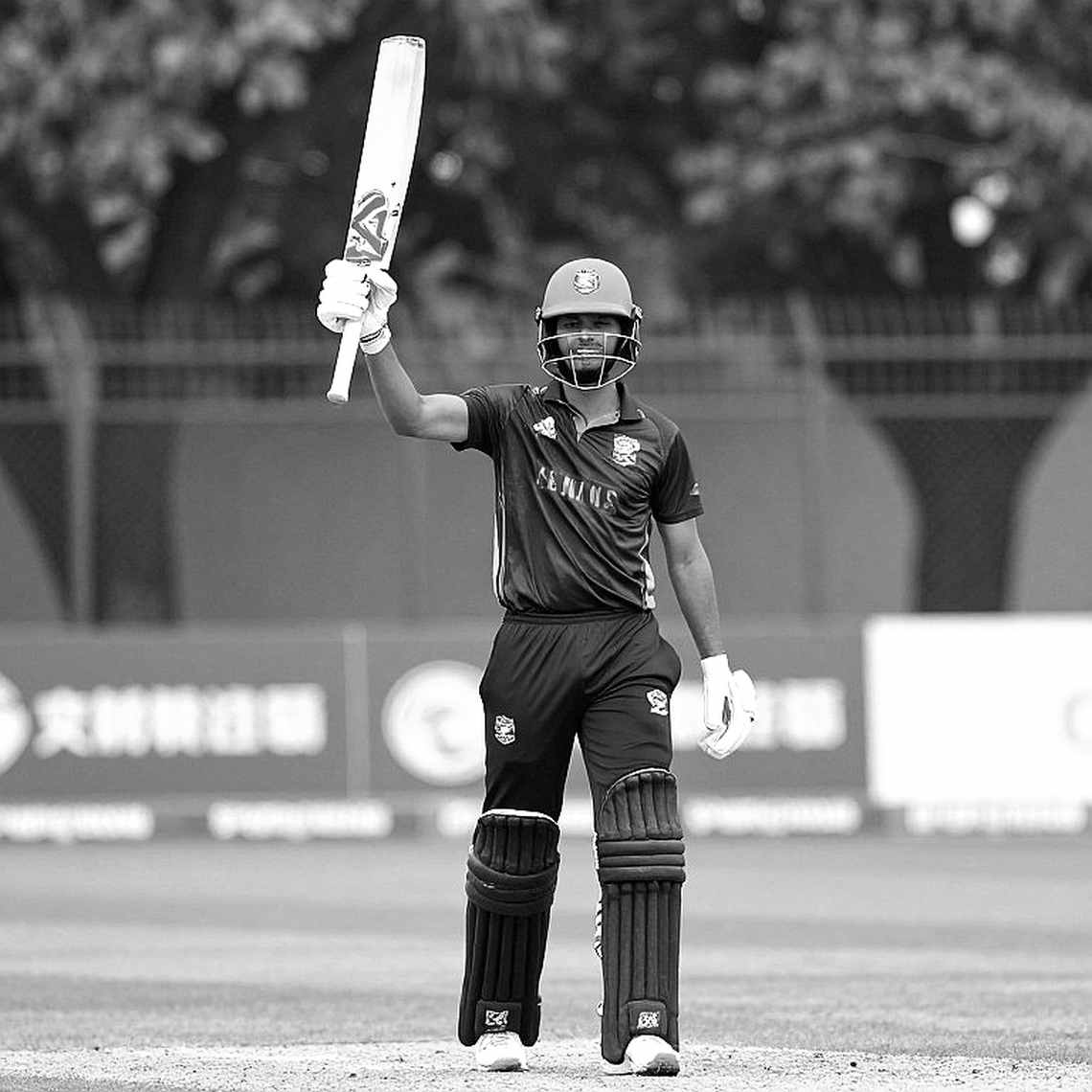
February 2026, Bay Oval, Mount Maunganui. Manjot Kalra's 101 not out was recorded that evening in at least a dozen formats — broadcast speed logs, seam position, the batter's wagon wheel, the field map. Twelve months earlier, an under-19 innings by the same batter had been played on some ground in India, and its record existed in no more than two places: the scorer's copy and a PDF uploaded to the board's website. No video, no ball-by-ball speed, no pitch age, no field placements.
That asymmetry of record-keeping is the least written chapter of selection in Indian cricket. Where there is a camera there is data; where there is data there is argument; where there is argument there is a claim. Where there is no camera, one line survives — and nobody stakes a story on one line.
In 2026 I went to the No. 2 ground at M. Chinnaswamy Stadium for a Cooch Behar Trophy quarter-final. A fifteen-year-old leg-spinner from Hubli, Anirudh Hegde, bowled 41 overs and returned 6 for 38. Those three figures went on the card. I took out a stopwatch and started timing his loop — counted eleven consecutive googlies, none of which the card has ever recorded. The Colts File began that day: one card per age-group debutant — date of birth, childhood coach, bowling action, and one physical detail no press release carries. In twenty-eight years those cards became 41 notebooks. The colts file never closed; it just changed desks.
Now the context without which this argument is incomplete. The record of Indian domestic and age-group cricket is split between three hands: the state association's scorer, the board's match-day scoring system, and outside websites that carry Ranji and above. None of them holds video of age-group matches, and much of the Ranji season has none either. When the record is that thin, everything that sets a player's price — a seamer's third spell, a quick's workload, a batter's intent, a pitch breaking on day three — stays locked in one pair of eyes. The eyes usually belong to the man a franchise has already called.
In 2026 my own method broke. For two seasons I had described Rohit Kulkarni, a Karnataka under-19 batter, as the most complete sixteen-year-old I had seen. In March the TW3 wrist X-ray at the National Cricket Academy in Bengaluru put his bone age at 20.5; he was nineteen. A two-year ban followed, and his father telephoned to ask whether I had known. I had written fourteen pieces on the boy. I took three weeks' leave and told my editor I was finished with profiles.
That break produced a rule I have never broken: no 'next big thing' piece without seeing the board's registration form and speaking to two coaches outside the family. But the same episode taught the reverse lesson, and it is the real thesis of this piece. A bone-age test manufactures a document. Because a document existed, the error surfaced, was caught, was argued over. A bowling action manufactures no such document. So when questions are raised about a seventeen-year-old's action eighteen months later, there is no footage to answer with — only rumour, and the boy is defenceless in front of it.
This is where the real analysis starts: what the scorecard does not record. A Ranji seamer bowls twenty-two overs on a third-day Chinnaswamy pitch. The card will say 3 for 78. The card will not say that fourteen of those overs were into the wind; it will not say that his third spell was running at 128 rather than 136; it will not say that he moved a fielder from second slip to gully and that decision produced two wickets. A scorecard is an account, not an archive. And selection committees, franchise scouts and academy coaches all argue from that account, because it is all they have.
In 2026, at forty-five, I left print for a digital-first site that wanted video and speed guns. The salary was lower, the stake higher. The 2026 under-19 World Cup vindicated the gamble. Kamlesh Nagarkoti and Shivam Mavi were touching 145 kph, and India's quicks averaged around 138 across the tournament. I sat six nights with broadcast speed logs and wrote that the age-group system had stopped manufacturing only spinners. At 140 up, the scoreboard was loud; the silence underneath was louder — because the same Nagarkoti and Mavi, a year earlier in a domestic tournament, had stood in front of no camera. The record that was made became the argument. The argument became pressure on selection. The speed log was not a broadcaster's gift; it was a break-in to the selection system, and that break-in is what made a pipeline story possible.
Now the part a domestic reporter happily skips — the auction. Since IPL 2026 and WPL 2026, the record gap has been filled privately. Franchises have replaced zonal selectors, but first they bought the selector's eye. Every franchise runs its own scouting database, a private archive that is never published. The direct consequence: a player whose record is public has his price set by the market, and a player whose record exists only in a scout's notebook has his price set by that scout. My own unsold file holds names with more than six thousand first-class runs and no IPL contract. This is not an exception; it is a category. That category has no video. So that category has no case.
February 2026, the first WPL auction in Mumbai. Smriti Mandhana went for ₹3.4 crore — a price set on international broadcast tape, not domestic tape, because domestic women's cricket had almost no tape at that scale. The same imbalance runs through the men's game; there are simply more cameras.
Let me put the popular view in its strongest form, because beating a weak version of it would be dishonest. The argument: India is now the most data-rich cricket nation on earth. The NCA has tracking, the board's digital scoring reaches every district, franchise performance departments know far more than the old selector did, and a player's pace, spin revolutions and workload are all measured. That argument is correct. I accept it fully — and then reverse it, because the problem with data is not its quantity but its address. Data that sits next to money becomes money's property. An auction price is derived from a record the franchise built itself; and what you build yourself, you have no reason to publish.
The second point is more uncomfortable: more documents also manufacture false precision. My 2026 experience is the proof. A document arrived, it was decisive, it was public, and it was enough to erase a career. The question is not whether we need paper; it is whether the paper can be contested. TW3 could be contested, which is why it became a debate. An action cannot be contested, because there is no document at all.
There is a third contradiction that distorts this entire structure. Where the record grew dense, it flattened the game. The fifty-over hundred became a number that swallows the shape of an innings — which pitch, under what pressure, in what role, all of it bows before the hundred. Too little record is a distortion, and too much is a distortion. What is needed in between is an archive that testifies rather than asserts.
In 2026 I spent five months digitising the 41 notebooks and spoke by telephone to nineteen former colts. In that six-thousand-word document the most useful lines were not the ones I had written; they were the ones I had not written, and which those men were now recalling themselves. The blank space on paper is testimony too; I only have to decide whether to record it.
So the forward question is not whether Indian cricket needs more data. It is who will decide, before the next age-group season, which grounds get recorded and which do not. Because a match with no camera has no case — and a player with no case goes home unsold one day. Whose desk is that boy's file sitting on? Has anyone asked?