
Cricket's Verification Crisis: When the Format Is Complete and the Facts Are Missing
क्रिकेट रिपोर्टिंग में सूचना-शुद्धता का अर्थ है: हर निष्कर्ष के पीछे एक सत्यापित, उद्धरण-योग्य तथ्य हो। तीन शर्तें अनिवार्य हैं — (1) फॉर्मेट स्पष्ट हो (टेस्ट/वनडे/टी20/द हंड्रेड), क्योंकि बिना फॉर्मेट के आंकड़े अमान्य हैं और क्रॉस-फॉर्मेट संदूषण होता है; (2) स्रोत का स्तर दर्ज हो (आधिकारिक बोर्ड, शीर्ष पत्रकार, सामान्य मीडिया, ट्रैफिक अकाउंट); (3) प्रकाशन और घटना की तारीख दोनों मौजूद हों, क्योंकि क्रिकेट में फॉर्म, रैंकिंग, फिटनेस और नीलामी मूल्य हफ्तों में बदलते हैं। नीलामी में कीमत और खेल-मूल्य अलग-अलग मापदंड हैं। जिस रिपोर्ट में सूचना-इकाइयां शून्य हों, उसे विश्लेषण न मानकर अपूर्ण घोषित करना चाहिए — क्योंकि ‘पूरा दिखने वाला खाली ढांचा’ स्पष्ट गलती से अधिक भ्रामक होता है।
Cricket reporting today lives in two worlds at once. One has scorecards, averages, strike rates, economy rates and ICC rankings. The other runs on the phrases 'according to sources', 'it is understood' and 'it is being said' — rumour, inference and auction gossip. The crisis of cricket journalism sits on the boundary between them.
The clearest picture of that crisis appears when a report looks complete from the outside — headline, subheads, tables, figures, confidence tags — but contains not a single verified information point. The reader has no way of knowing what they are trusting. Professionals call this a silent failure: a failure that does not show, and therefore does not get caught.
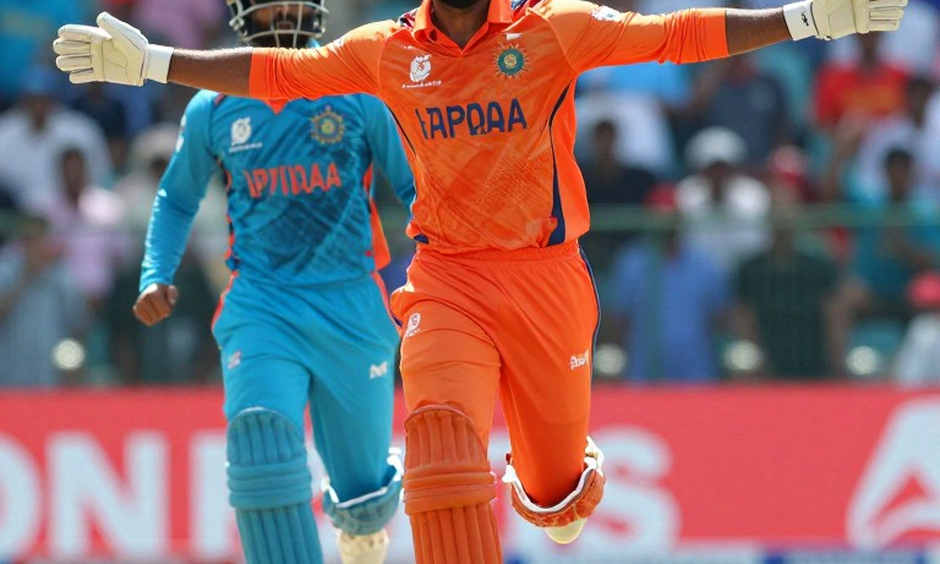
When the structure outlives the facts
The value of any sports report lies not in its decoration but in its information units. An information unit is the discrete, citable fact to which every downstream conclusion connects — which match, which format, which score, which player, which event. A report with zero such units cannot support analysis, because analysis begins with facts, not with guesses.
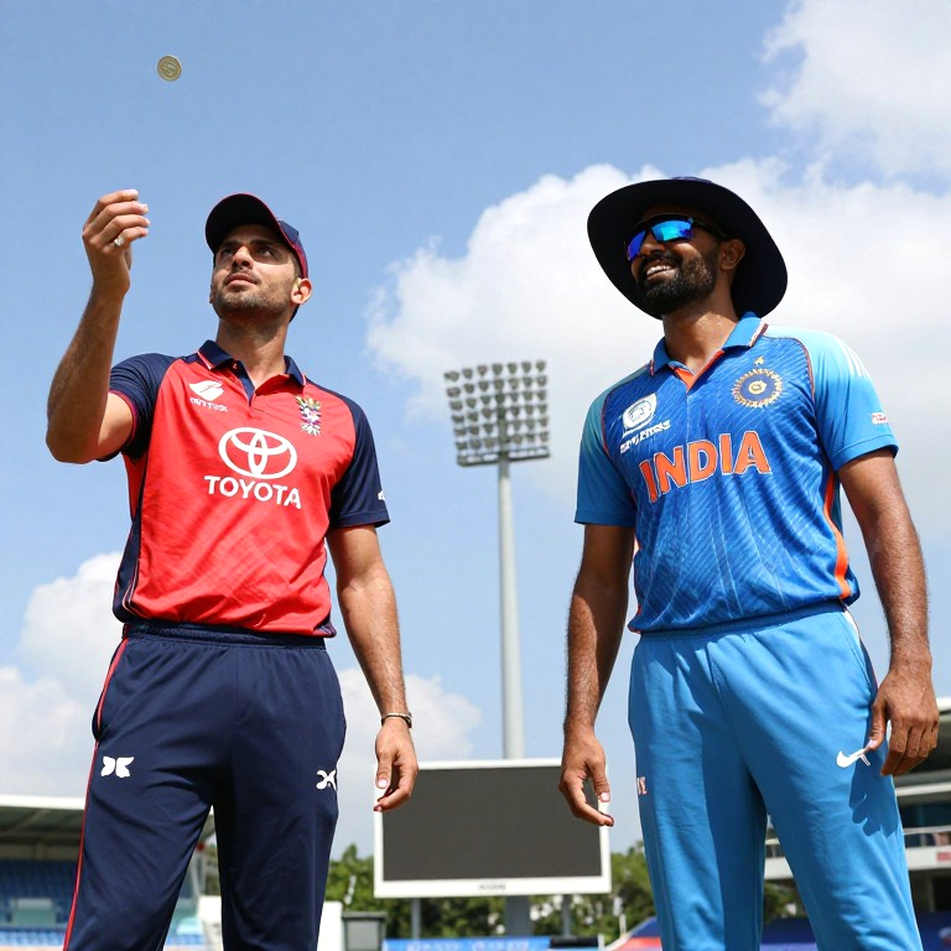
The problem is that modern content pipelines test 'is the structure valid' and 'is there content' as two separate checks, and the first often passes while the second fails silently. A hollow report passes every automated test, and every process below it — editing, summarisation, social cards, newsletters — treats it as real analysis.
Format discipline: cricket's first non-negotiable rule
Cricket's defining analytical feature is that format is settled first and reasoning follows. Test, ODI, T20 and The Hundred are built on entirely different tactical foundations. In Tests, the first new-ball spell, the day-one pitch, fourth-innings pressure and the possibility of a draw are decisive. In ODIs it is the powerplay, middle-over rotation and the last ten overs. In T20 the game splits into powerplay, middle overs and death overs, each judged on its own criteria.
The rule is simple: without format confirmation, a tactical comment is not merely incomplete but invalid. The moment you lift a number without knowing the format, you contaminate ODI logic with Test data or T20 logic with ODI data. This is cross-format contamination, and it is the most common and most expensive error in sports analysis.
Cricket's second structural problem is small samples. A series, a season, sometimes four or five innings create an entire 'new story' about a player. On that thin base are built claims about a young star's rise, a veteran's decline and the next great player. The professional rule is to ask how large the base is before accepting the claim. Situational splits — home versus away, pressure overs versus comfortable conditions — matter more than the raw average.
The invisible weight of home advantage
Cricket's home-away differential is larger than in almost any other sport. Pitch character, bounce, humidity, dew, crowd pressure and travel fatigue combine into an environment in which the same player can look ordinary at home and extraordinary abroad, or the reverse. So the first question in any team assessment must be: where was this performance produced? Without venue and host nation, team analysis has no foundation.
Weather and conditions attach to this. Rain, dew, wind and the applicability of Duckworth-Lewis-Stern can change an outcome so much that 'who won' and 'who played better' become different questions. An honest report must separate the two, or it ends up glorifying the result instead of explaining the process.
Source grading: where the story came from
In cricket journalism, the conclusion sometimes rests entirely on who said it. An official board release, a top-tier journalist's report, general media coverage and a traffic-chasing social account do not carry equal weight and should not be presented as though they do. This matters most in auction and contract news and in selection and fitness news, where the source is often the substance of the story.
A professional standard should require every claim to carry its source tier. Is it an official announcement? A trusted journalist's story? Information deliberately leaked by an agent? A claim built purely for traffic? Without these answers the story cannot be evaluated. A second check follows: the leaker's motive and track record. A source that has repeatedly proved wrong should not get the same space as one that has consistently proved right. This is not opinion; it is process, and it is what separates journalism from rumour.
Auctions, NOCs and the league-versus-country fault line
The most common auction error is mistaking price for value. The sum paid is set by market conditions, team needs, the pool of available players and bidder psychology — it is not a direct measure of sporting ability. A serious report should therefore show transaction price and sporting fair value separately, and should analyse the type of premium: was the extra money for a specific skill, for domestic audience pull, or simply for the heat of a bidding war? These mean entirely different things.
Rules such as the Right to Match matter here, because they determine how far a former team can retain its player. Internationally, the No Objection Certificate is central: it is the board's permission without which a player cannot appear in an overseas league. The league-versus-country tension is now cricket governance's most durable fault line, running through workload management, central contracts, league windows and NOC conditions.
Governance and integrity: where facts matter most
In cricket administration, one guess can change the whole story. ICC revenue-share debates, the influence of large boards, rule changes, DRS and umpire's-call controversies, slow over-rate sanctions, selection disputes and bilateral series frozen by geopolitics can only be analysed on documents and facts.
A dangerous habit is conflating process with outcome. If a series result followed disputed umpiring, saying 'the better team won' or 'the lucky team won' are both incomplete. Honest analysis separates the luck component from the result, and that cannot be done without hard data.
Cricket's integrity record is worth remembering. The 2026 match-fixing affair, the 2026 spot-fixing case in England and the 2026 IPL spot-fixing case show how weak information systems can damage the sport's credibility for years. These are cited not to inflate a story but to show that fact-checking in cricket is not merely good journalism — it is a safeguard.
Time sensitivity: when cricket news goes stale
Cricket claims decay unusually fast. Form changes in weeks, rankings after every series, fitness sometimes in days, auction values within a single season. The value of any cricket claim is therefore tied directly to its date. A professional report needs two dates — publication and event — so the reader can judge staleness. This is why old news that looks fresh is today's biggest information problem: technically not wrong, functionally misleading.
Sentiment amplification and the expectation gap
Cricket, especially in South Asia, is highly conducive to sentiment amplification. A good innings becomes an innings for the ages within hours; a defeat becomes a crisis and a win a rebirth. The three phases are visible: germination, acceleration, backlash.
The professional question is always the same: does the available data support the excitement? If it does, the story lasts. If it does not, the story has a short life regardless of how loud it is. Market expectation, objective assessment and auction chatter are three different pressures, and when they coincide an expectation gap opens. The job of reporting is to name that gap, not widen it.
Industry transmission: from one event to the whole system
No major cricket event stays isolated. A broadcast rights deal, a league expansion, an auction or a star transfer moves several links downstream: broadcast media, the South Asian heartland market, the talent supply chain, the capital network of cross-league owners and private investors, fantasy and digital platforms, and derivative markets including IP, women's cricket, the US market and equipment. The default frame for any cricket-economy analysis should be that the Indian market supplies the largest share of global cricket revenue — but even that frame only works once you know whether the story touches commercial matters at all.
Conclusion
The whole argument condenses to one sentence: a report without facts is at its most honest when it says outright that it has no facts. Four practical recommendations follow. First, make the information-point check mandatory — an empty list means the report is incomplete, not analytical. Second, make format and source entry conditions; without them, no data should be cited. Third, record both publication and event dates. Fourth, make source grading a mandatory field rather than an optional note.
The real challenge is not technical. Cricket news is read most when excitement is highest, and excitement is highest when context is thinnest. In that environment, saying 'I don't know' is hard — but it is the only word that preserves reader trust over time. Only those who hold the facts have the right to a conclusion. Everything else, however elegantly written, is an empty frame, and an empty frame does more damage than an honest silence.